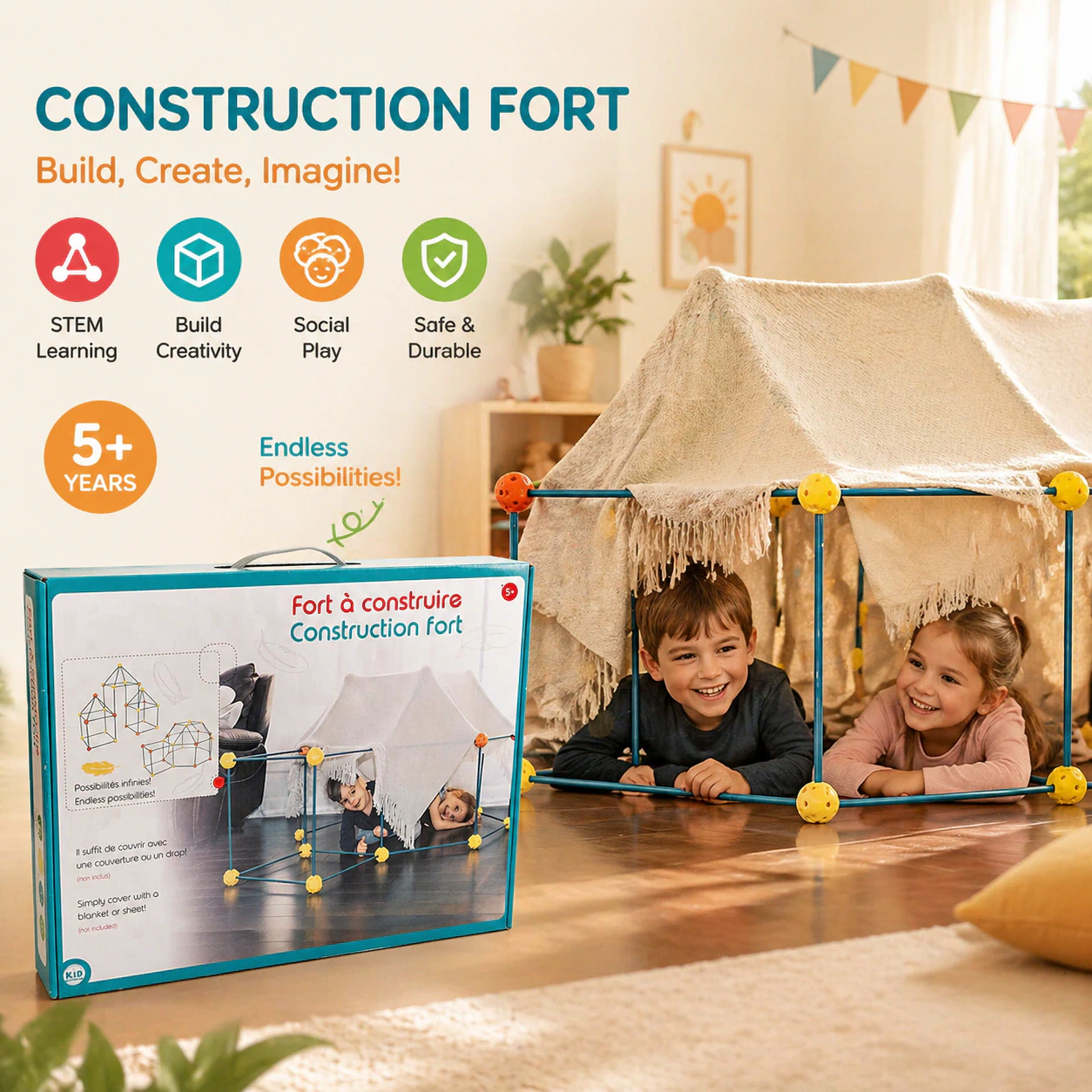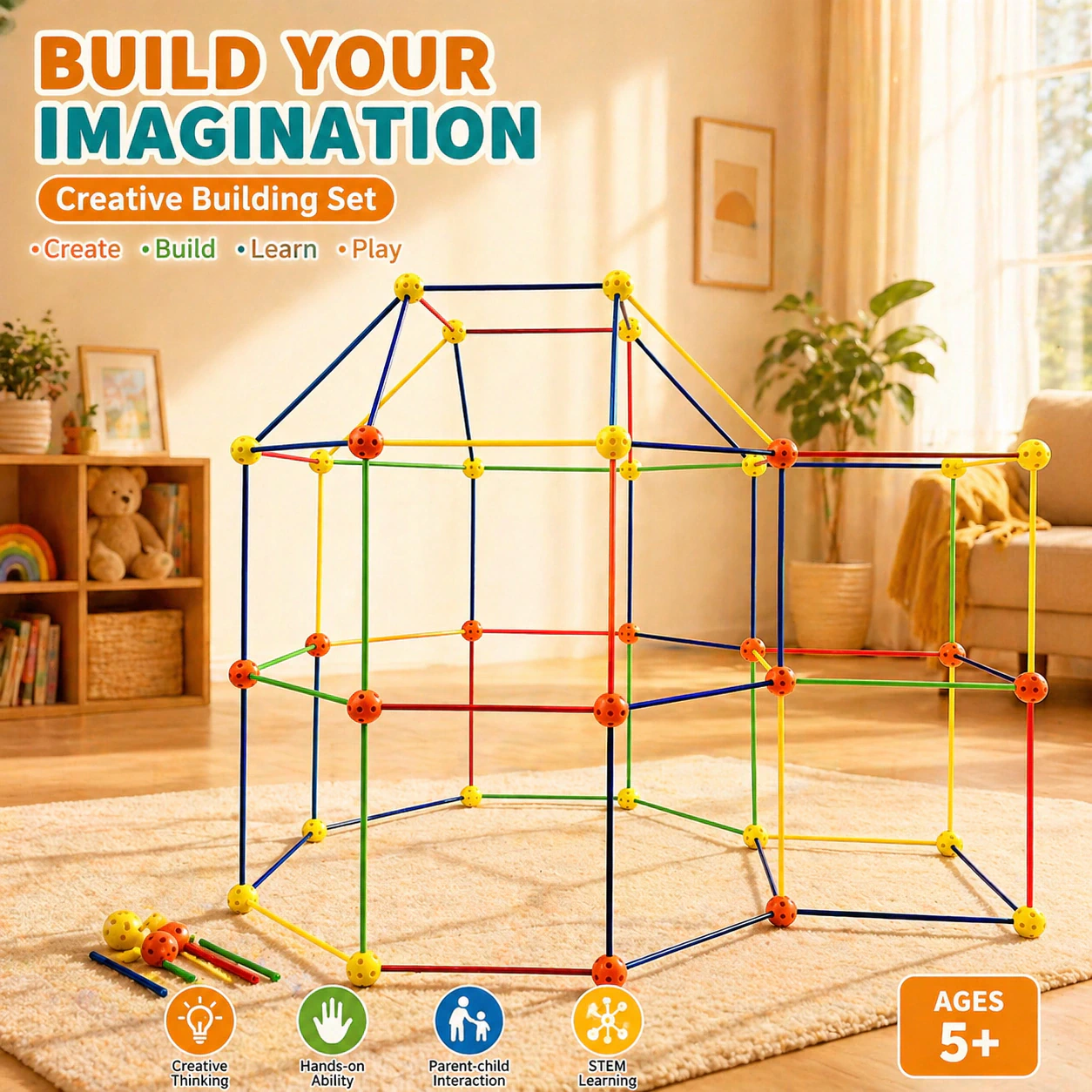
A private-label quotation is more than a unit price. For fort building kits, the early brief should also cover safety and documentation basics. If these questions are left until after artwork and samples are approved, small changes can become expensive: a warning text moves, a part list changes, a label is missing, or the test sample no longer matches the sales version.
This article is not legal advice. It is a practical sourcing checklist for buyers preparing private-label fort building kit projects. The goal is to make the first quote closer to the real project and reduce late changes before production.
Start with market and age grade
The same physical product may need different packaging language and file preparation for different markets. Buyers should identify whether the product is intended for the United States, Europe, domestic sales, or multiple regions. The target age should also be clear before the supplier quotes final packaging.
Age positioning affects warnings, instructions, part-size review, and page language. A product positioned for younger children may require more supervision notes and clearer assembly guidance. A product positioned for older builders can focus more on challenge builds, but the part list still needs to match the actual sales version.
If the target market or age grade changes after sampling, the project may need another review. It is better to put these details into the first brief.
Confirm the full part list before artwork
Fort kits usually include rods, connector balls, optional fabric or flags, instructions, storage bags, and color boxes. Every item should be listed before artwork approval. Even a small accessory can affect warnings, package claims, or photo accuracy.
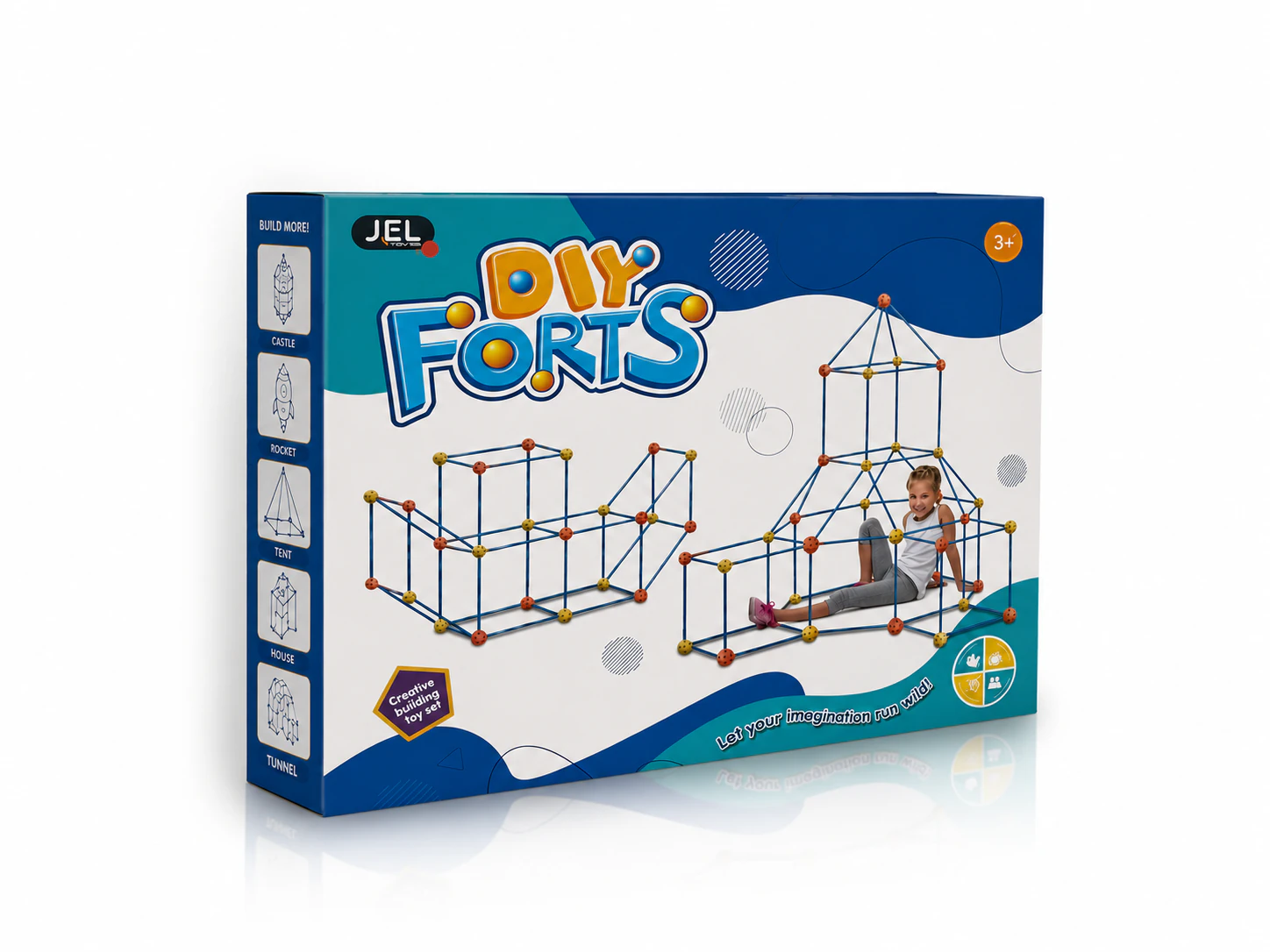
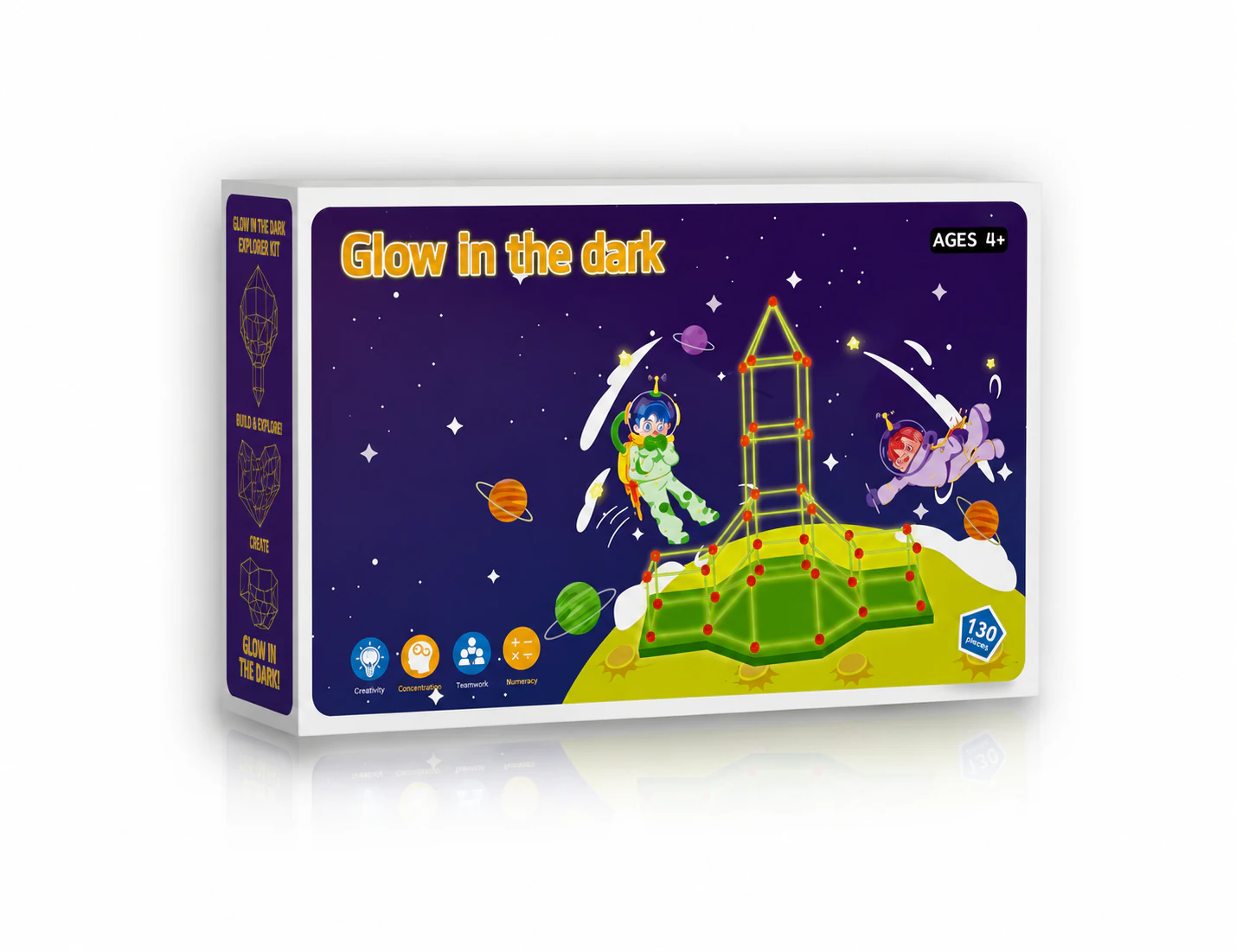
The Custom DIY FORTS Color Box Building Kit is a useful base for this discussion because logo, box design, rod color, connector color, instruction language, and piece count can be reviewed together. A themed item such as the Custom Glow in the Dark 130-Piece Fort Building Kit may need extra care around glow claims and use instructions.
The safest workflow is to keep the quotation part list, sample part list, artwork part list, and test sample aligned.
What belongs in a pre-quotation safety brief
A useful brief does not need to be long, but it should be specific. The supplier needs enough information to understand the channel and prepare realistic assumptions. If the project is for e-commerce, page images and instruction clarity may matter as much as box printing. If it is for a retail shelf, warning placement and package panels need early attention.
Buyers should also clarify whether existing reports can be used as reference only or whether new testing is expected for the final configuration. A previous file may help discussion, but the final sales product should match the documentation used for channel review.
| Requirement item | Confirm before quote | Why it matters |
|---|---|---|
| Target market | U.S., EU, domestic, or multi-market | Warnings, language, and file scope |
| Age grade | Target user and supervision expectation | Instruction and small-parts review |
| Part list | Rods, balls, fabric, flags, bags, manual | Sample and package consistency |
| Packaging language | Box, manual, labels, carton marks | Artwork approval and channel checks |
How Yaoshun works through the requirement list
Yaoshun can review private-label fort kit requirements before a formal quotation is finalized. The team can compare base products, piece-count changes, color options, packaging direction, and document expectations so that the buyer understands what is standard and what needs custom handling.
This early alignment saves time. A clean brief helps the factory quote the right configuration, prepare the right sample, and avoid late artwork or compliance changes. It also helps the buyer present a clearer project internally.