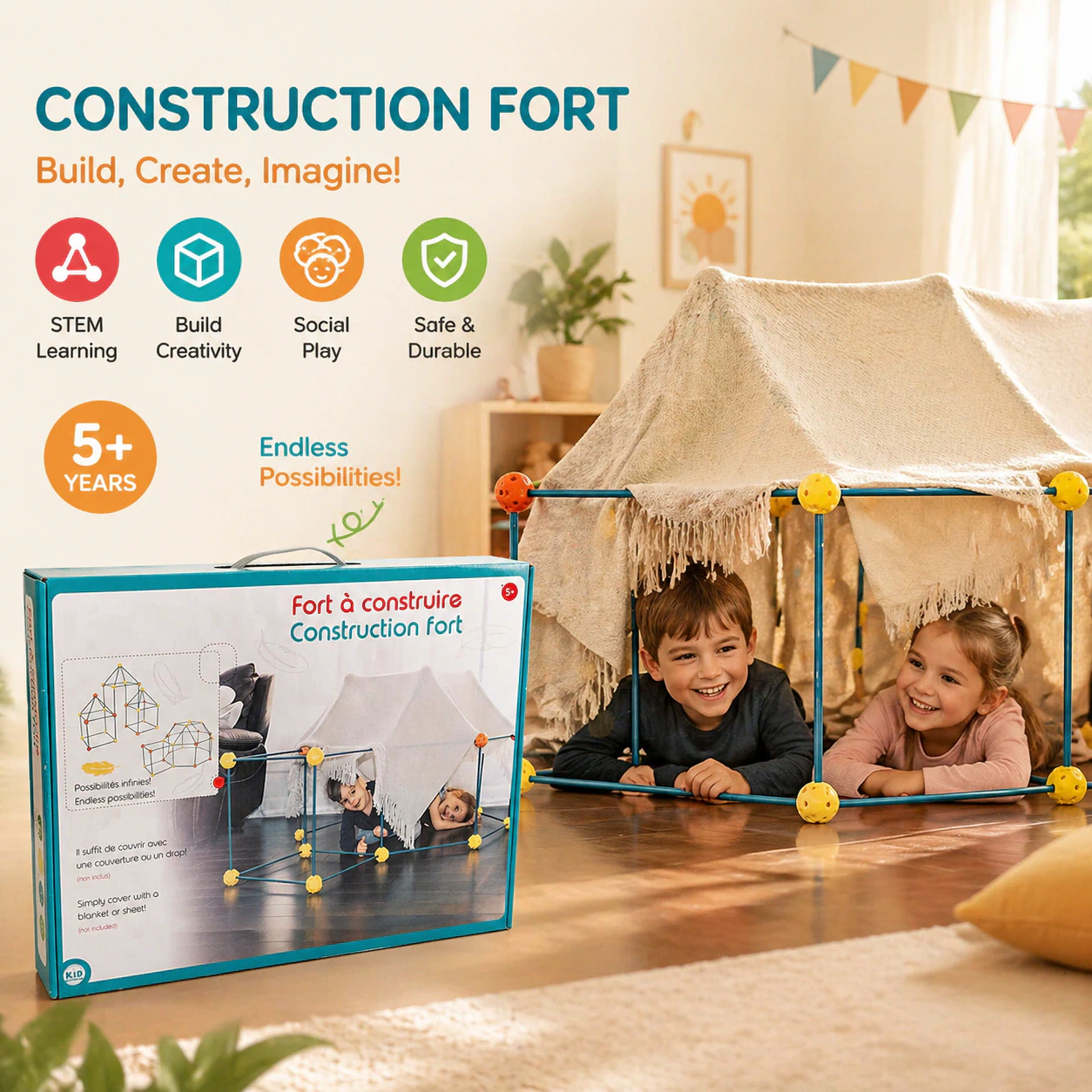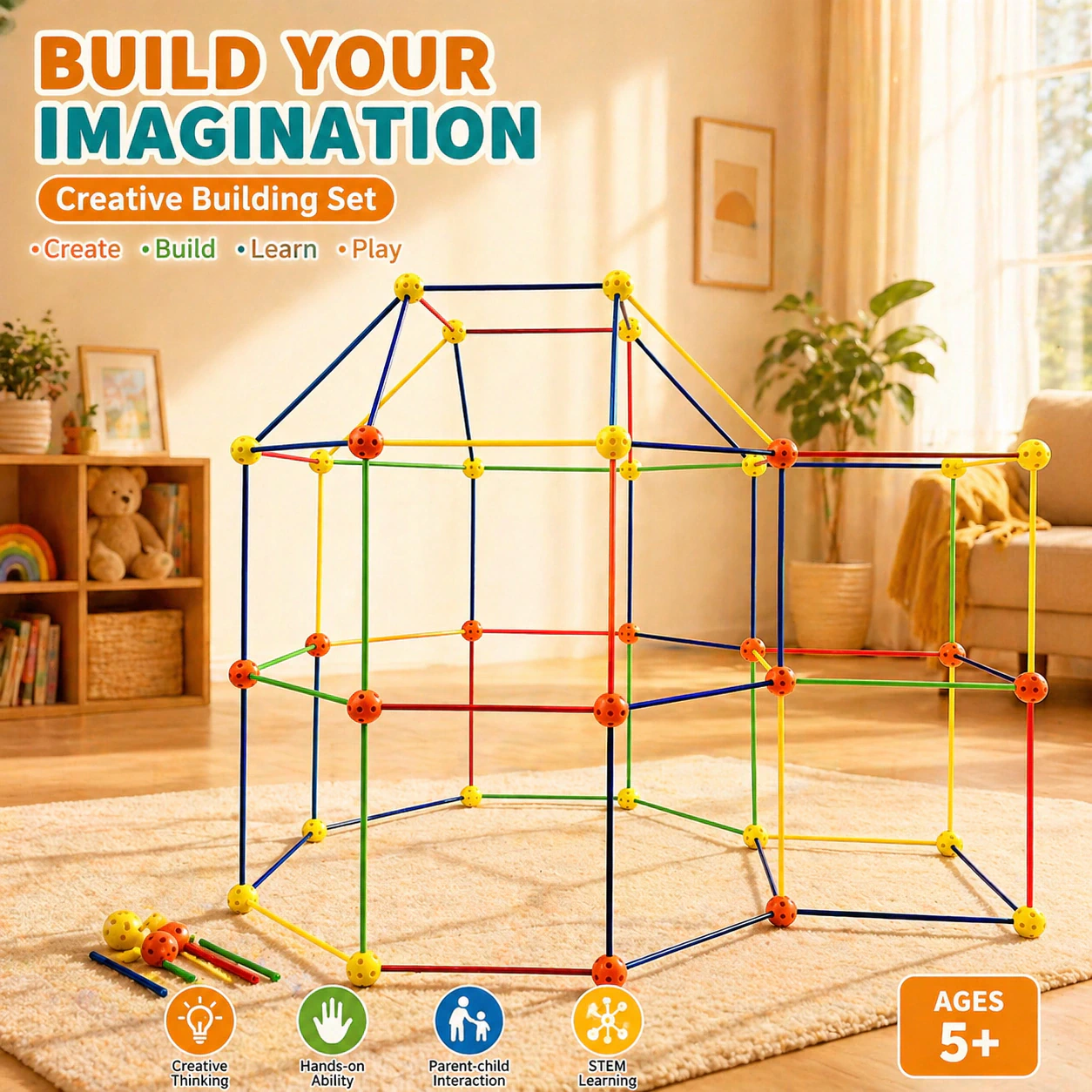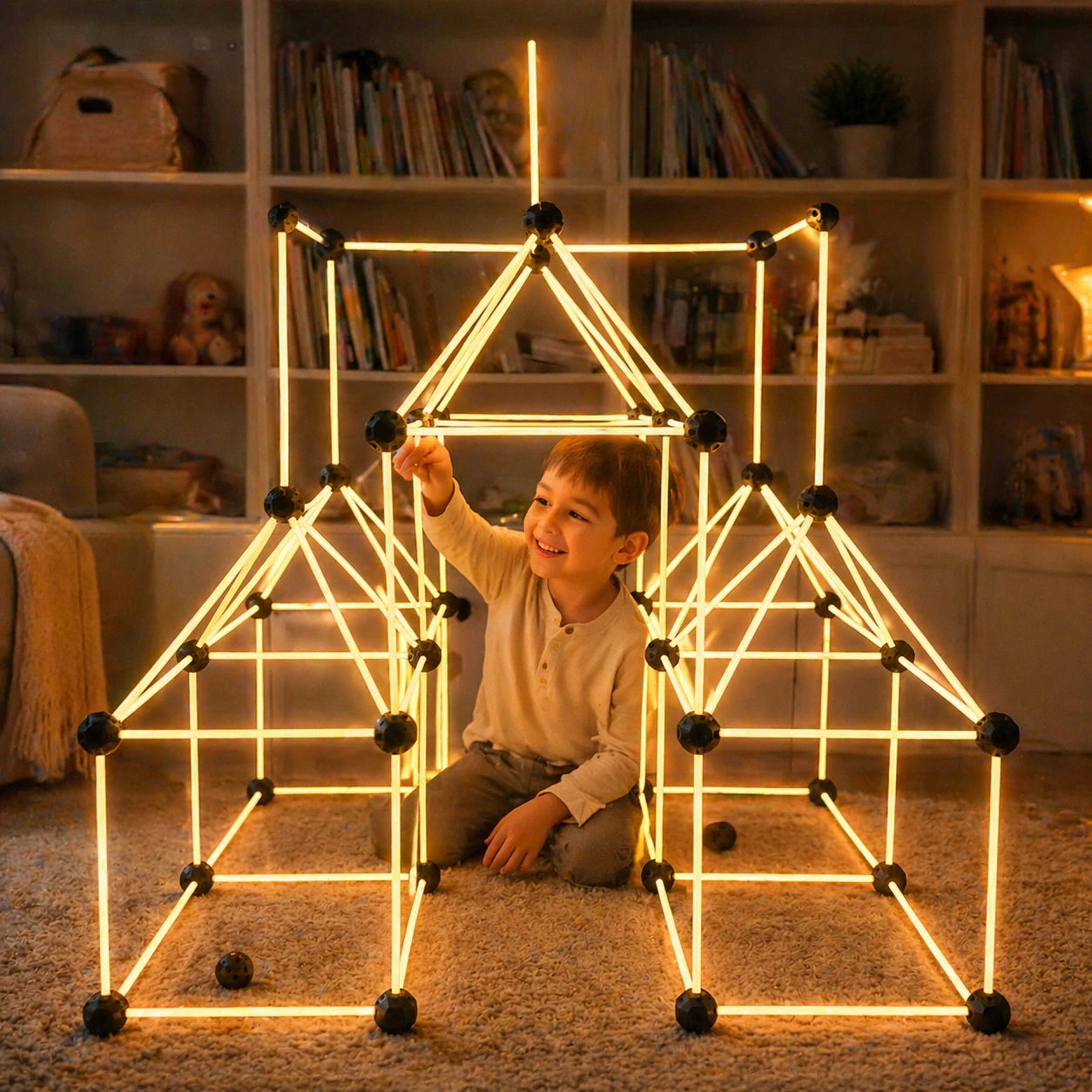
Piece count is one of the first questions buyers ask about a fort building kit, but it should not be treated as a simple bigger-is-better number. A good series uses piece count to create clear product roles. A 69-piece kit should feel easy to start. A 100-piece kit should feel like the dependable family choice. A 168-piece or 228-piece kit should show a visible upgrade: larger rooms, more entrances, stronger roofs, or group play scenes.
When the ladder is planned well, each SKU has a reason to exist. When it is not, customers see several boxes that look similar and choose only by price. That weakens the whole category.
Start with user confidence
The smallest kit in a series has a special job. It must make the system approachable. If a starter product cannot create a satisfying first build, customers may never move up to larger configurations. The first SKU should therefore focus on clear instructions, quick completion, and a finished shape that photographs well.
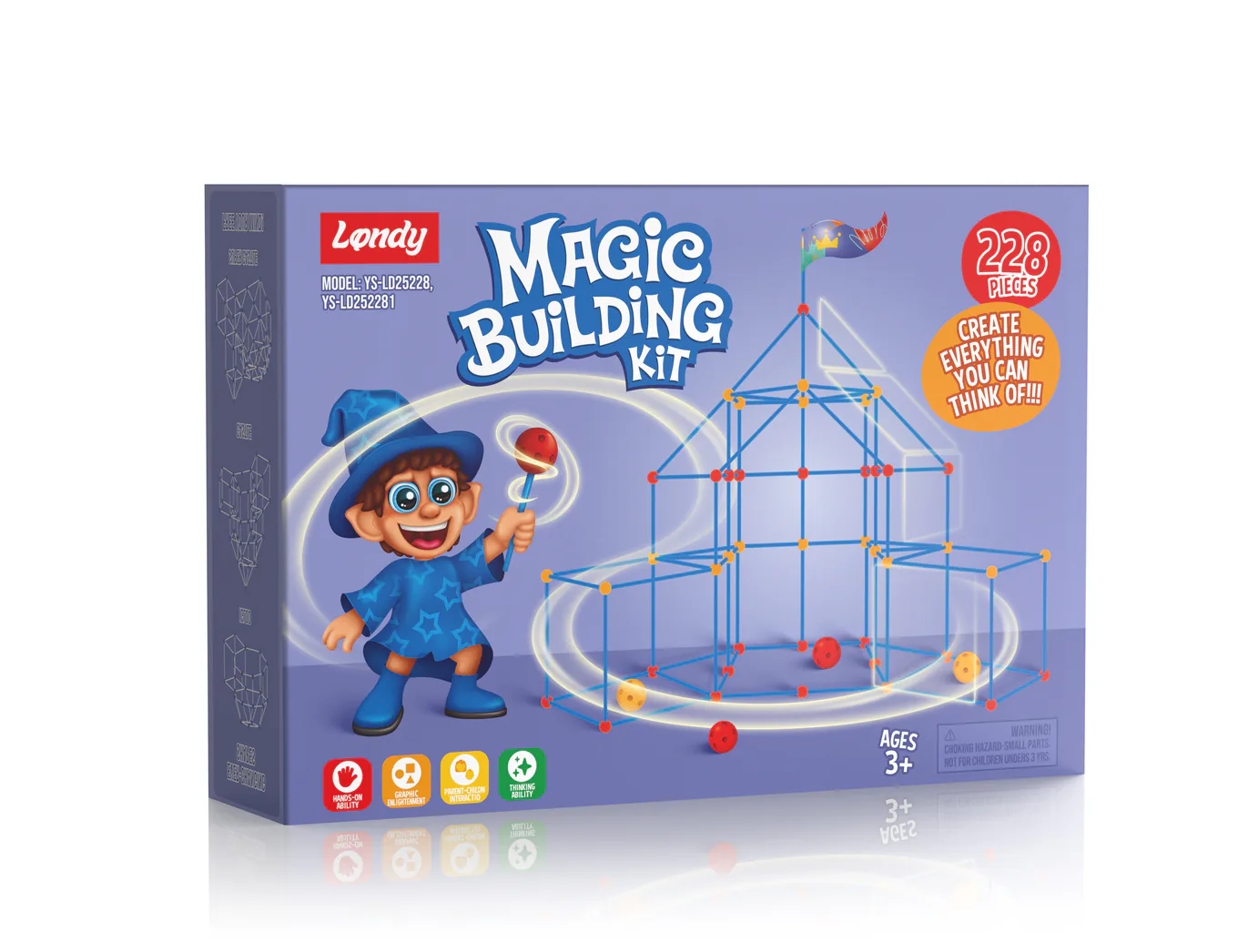
The largest kit has a different job. It must show why the extra pieces matter. More rods and connectors should mean larger rooms, stronger roofs, multiple entrances, or collaborative builds. If the photos do not show that difference, the higher price may feel arbitrary.
Middle SKUs connect those two roles. They often carry the most stable sales because they balance cost, package size, and play value.
Use piece count to separate occasions
A strong ladder should separate use occasions, not only box sizes. Starter kits can serve first-time builders and small rooms. Mid-size kits can serve birthday gifts and routine family play. Large kits can serve siblings, playdates, schools, and premium gift channels.
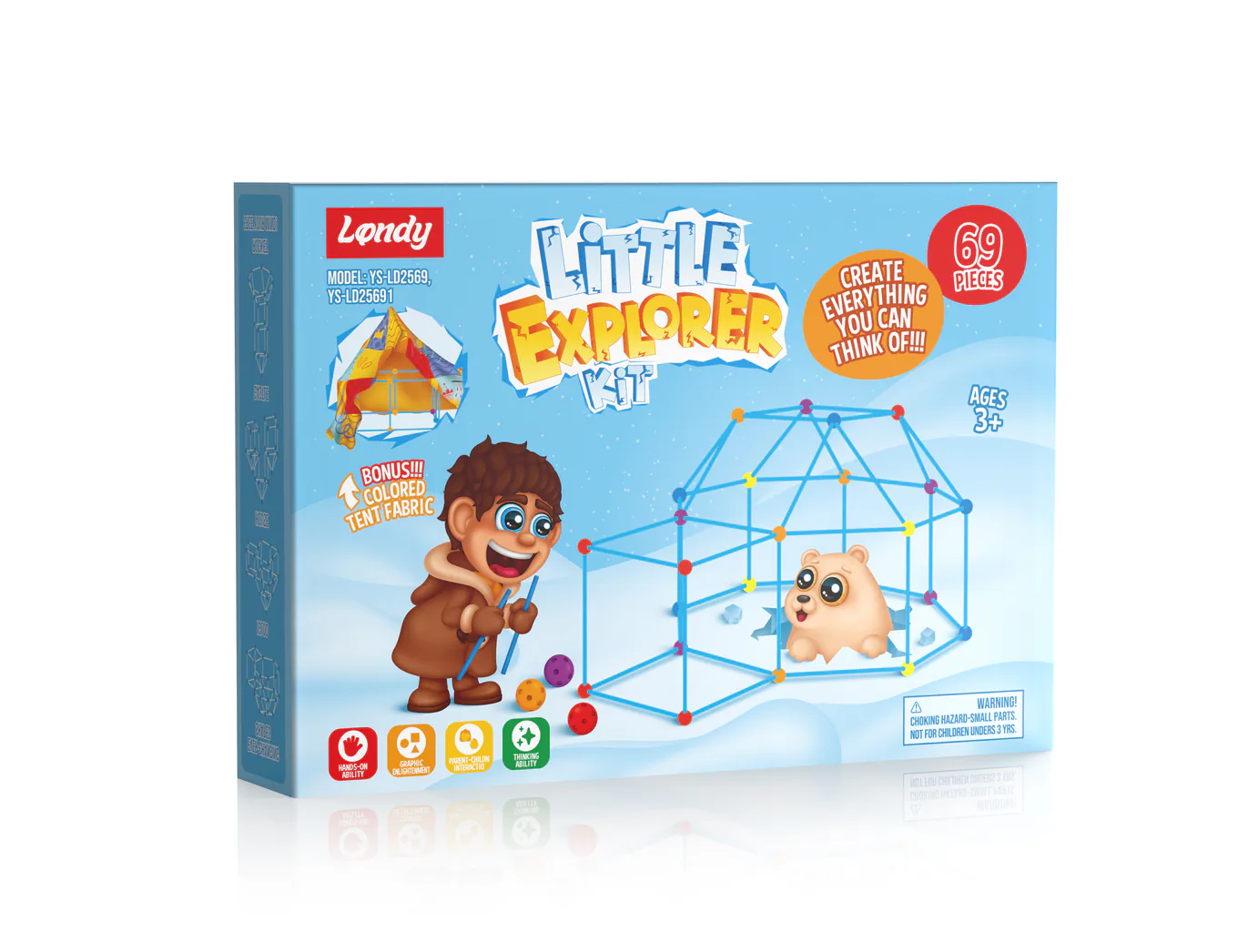
The LONDY Magic Building 228-Piece Fort Building Kit is suitable for the top of a ladder because it can support bigger layouts and multiple children. At the other end, the LONDY Little Explorer 69-Piece Fort Building Kit can introduce the same building logic in a smaller package.
Once these roles are clear, packaging can be more direct. The small box does not need to pretend to be a whole-room build. The large box should not hide its advantage behind the same product photo as the smaller item.
What changes as count increases
Increasing the count should change more than the number printed on the box. It should affect the build examples, instruction content, packaging claims, and image set. Buyers should review whether each level has a distinct reason for purchase.
If a 100-piece and 120-piece kit show almost the same finished tent, the difference may be hard to explain. If the 120-piece kit adds a stronger roof, extra tunnel, or larger reading base, the upgrade becomes visible. This is especially important for e-commerce, where customers compare boxes quickly.
| Piece-count level | Job in the series | Scenes to photograph |
|---|---|---|
| 60-80 pieces | Starter and trial purchase | Simple tent or first base |
| 90-130 pieces | Core family gift | Several rebuild ideas |
| 150-180 pieces | Theme or higher-value pack | Glow, color, or larger layout |
| 200+ pieces | Premium and group play | Multiple rooms or collaborative build |
Plan packaging and logistics together
Larger counts affect more than retail value. They influence box size, carton loading, storage at home, manual length, and photo requirements. Buyers should review these costs before approving a larger configuration. A premium kit can be attractive, but only if the package and shipping plan still match the channel.
Yaoshun can help compare configurations at the brief stage so that the piece-count ladder matches both product value and operational reality. The best range gives customers a clear upgrade path without making production unnecessarily complex.