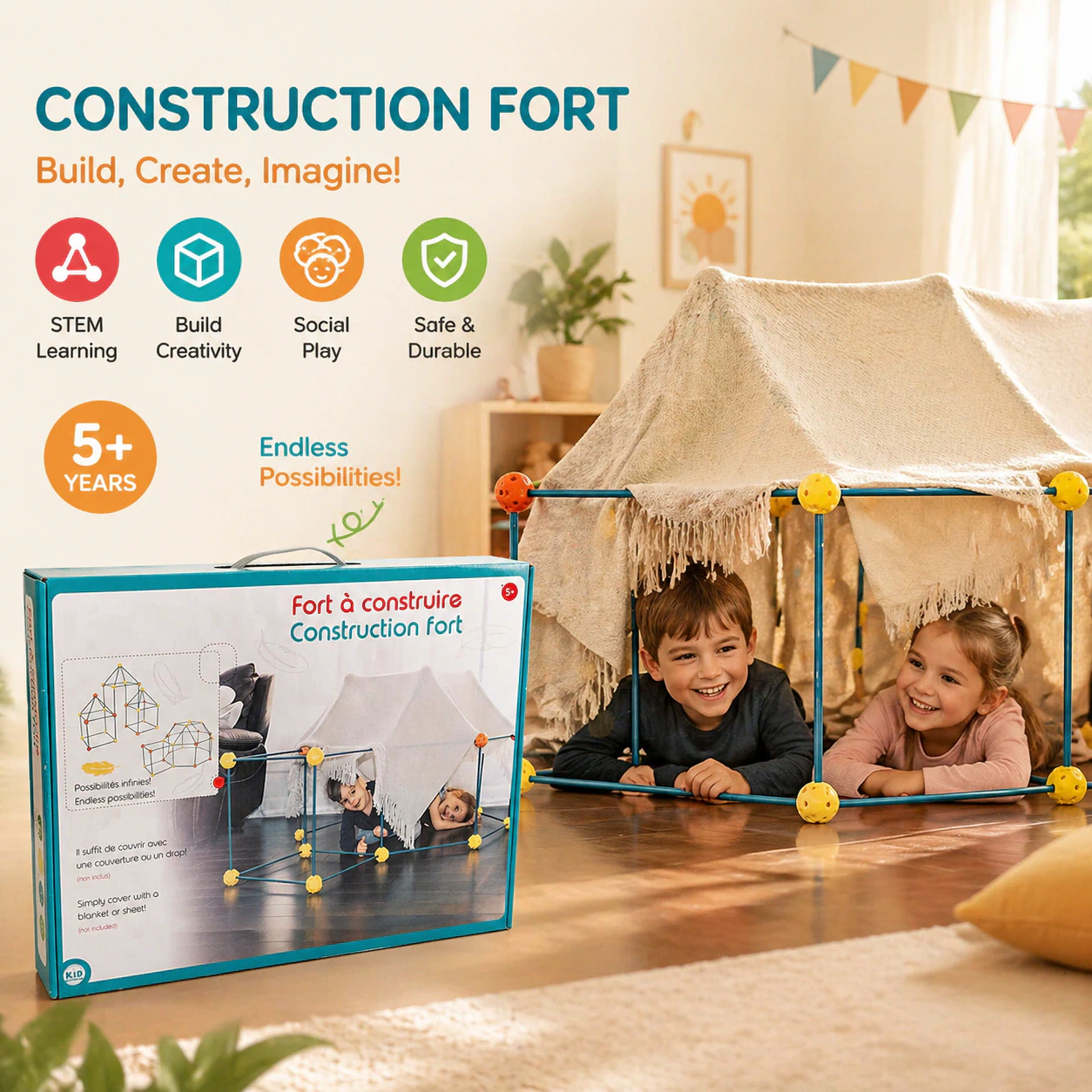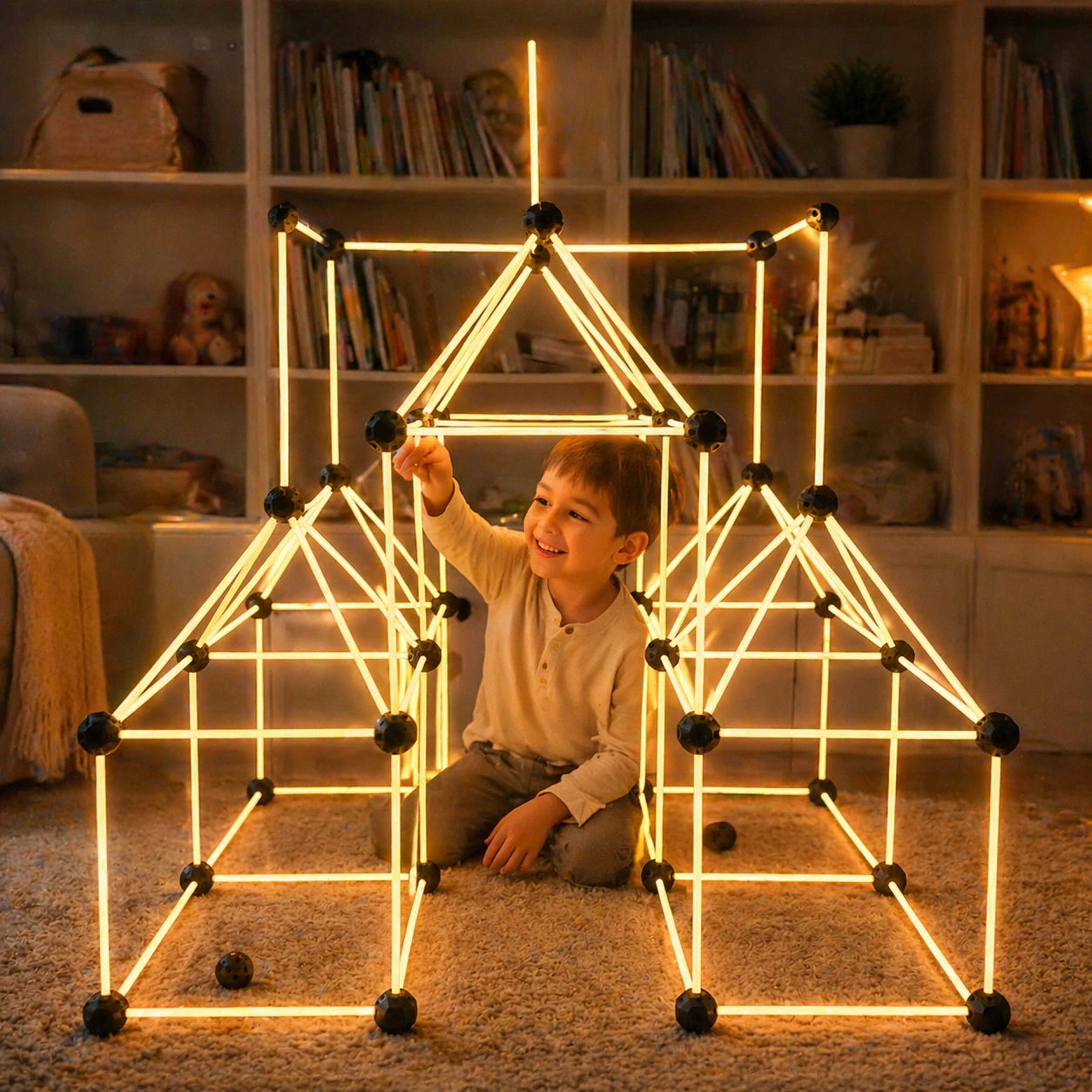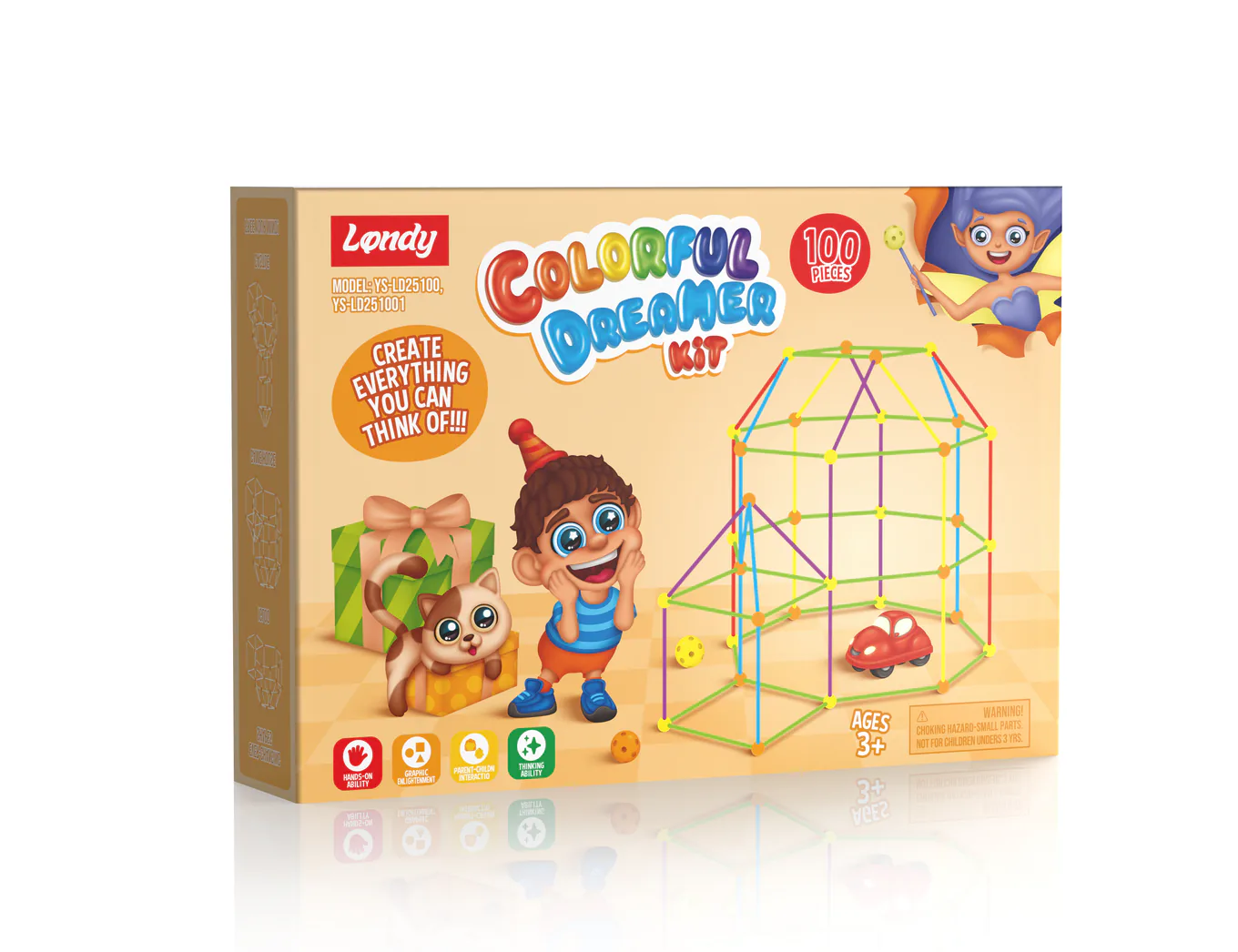
A fort kit can look simple in a product photo: rods, connector balls, and a few finished shapes. At home, the experience depends heavily on the words and diagrams that guide the first build. Good instructions do more than tell families where to place each part. They give children and parents a shared spatial language.
Words such as above, below, corner, across, diagonal, entrance, support, and roof are not decoration. They help families talk through the structure while they build. When the manual uses those words consistently, the product feels calmer, more educational, and less like trial and error.
Instructions shape the first impression
The first build decides whether a family sees the toy as rewarding or messy. If the instruction card jumps too quickly into a complex castle, a young builder may lose patience before understanding the system. If it starts with a square base, four uprights, and a simple roof, the child can see how one decision leads to the next.
Spatial language helps because it turns vague help into useful guidance. Instead of saying make it stronger, a parent can say add one rod across the top or place the connector at the back corner. The child hears the words, sees the structure, and connects the action to the result.
For private-label buyers, this is not only a learning benefit. It reduces complaints, returns, and negative reviews caused by unclear assembly. A stronger manual makes the same parts feel more valuable.
Use words that match the part system
Fort building instructions should be written around the actual operations children perform. They compare rod length, choose connector direction, close a frame, reinforce a weak point, and decide where the door goes. Those operations should become the vocabulary of the manual.
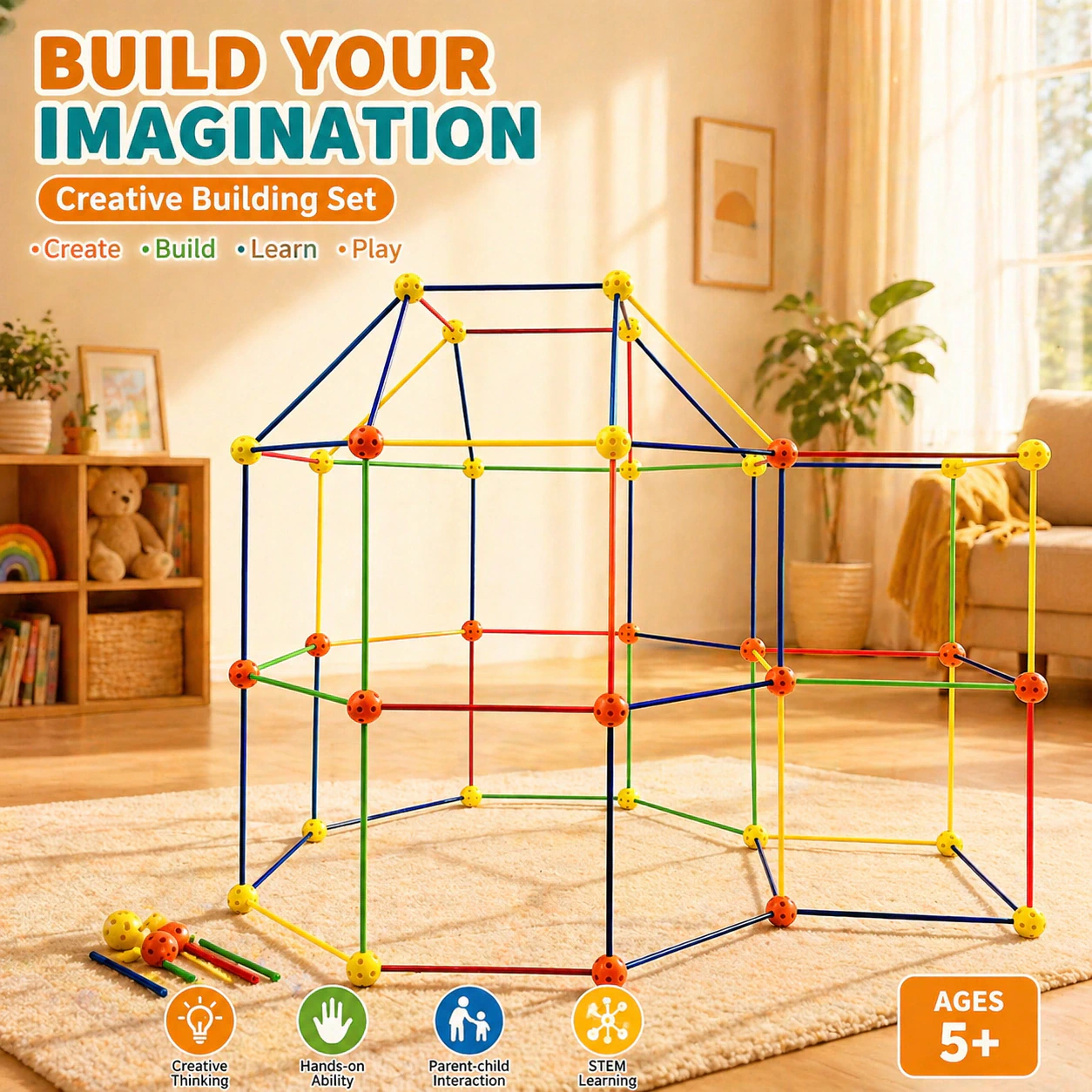
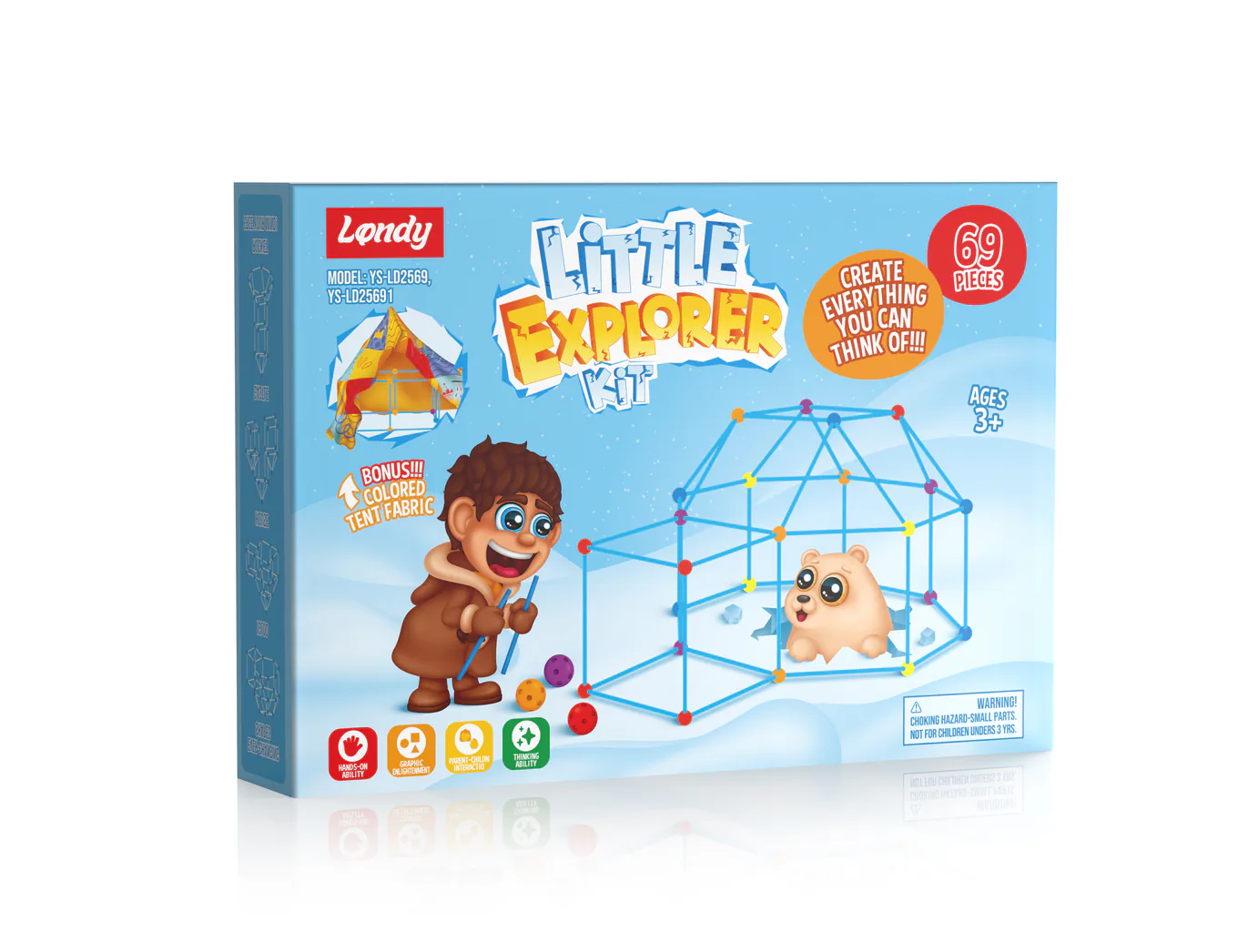
The 100-Piece STEM Fort Building Kit is a good fit for this approach because it can support simple tents, cubes, tunnels, and small base structures. A compact starter set such as the LONDY Little Explorer 69-Piece Fort Building Kit can use an even more guided manual, with fewer shapes and clearer parent-child prompts.
A useful manual does not need to sound academic. It needs to be precise. The best wording is short, visible, and tied to the next action.
Where instructions affect the first build
Instruction design should not be a file added after the box is almost finished. The manual affects the first build, age guidance, box copy, customer service, and the photos or videos used online. If the product is sold online, the first three steps can also become page images or short videos.
Buyers should check whether the manual matches the target age. A set for younger children may need larger step images, color-coded rods, and fewer shapes per page. A set for older builders can include challenge cards, rebuild ideas, and open-ended prompts that ask children to modify the frame.
| Instruction choice | Why it matters | Best use case |
|---|---|---|
| Named parts | Children learn the system faster | Starter kits and family gifts |
| Step-by-step base frame | Reduces first-build frustration | Marketplace listings |
| Spatial words | Supports parent-child guidance | STEM and education positioning |
| Challenge shapes | Extends repeat play | Larger kits and older builders |
How to brief the instruction style
When buyers ask for custom packaging, they should also brief the instruction style. Useful inputs include target age, market language, number of first-build shapes, whether parents are expected to help, and whether the brand wants a STEM tone or a lighter family-play tone.
Yaoshun can support this discussion at the sample stage. The product team can connect piece count, shape difficulty, photo direction, and manual wording so that the box, instructions, and product page tell the same story. This is especially useful when a buyer wants one base system to serve several sales channels.