Retail toy assortments are easier to manage when one product system can serve several customer stories. Fort building kits do this well. The same rod-and-ball structure can be sold as a construction toy, a STEM activity, a screen-light family project, a birthday gift, or a themed seasonal set.
That flexibility is the real strength of open-ended construction toys. They do not depend on one fixed finished model. A child can build a tent, tunnel, base, shop, castle, reading corner, or small stage with the same pieces. For buyers, this means one category can support several shelf messages without requiring a completely different tooling route each time.
Open-ended does not mean unclear
Some buyers worry that open-ended toys are harder to explain because there is no single final model. That risk is real if the product page only shows loose parts. The solution is to give customers a few strong starting points while still leaving room for children to rebuild.
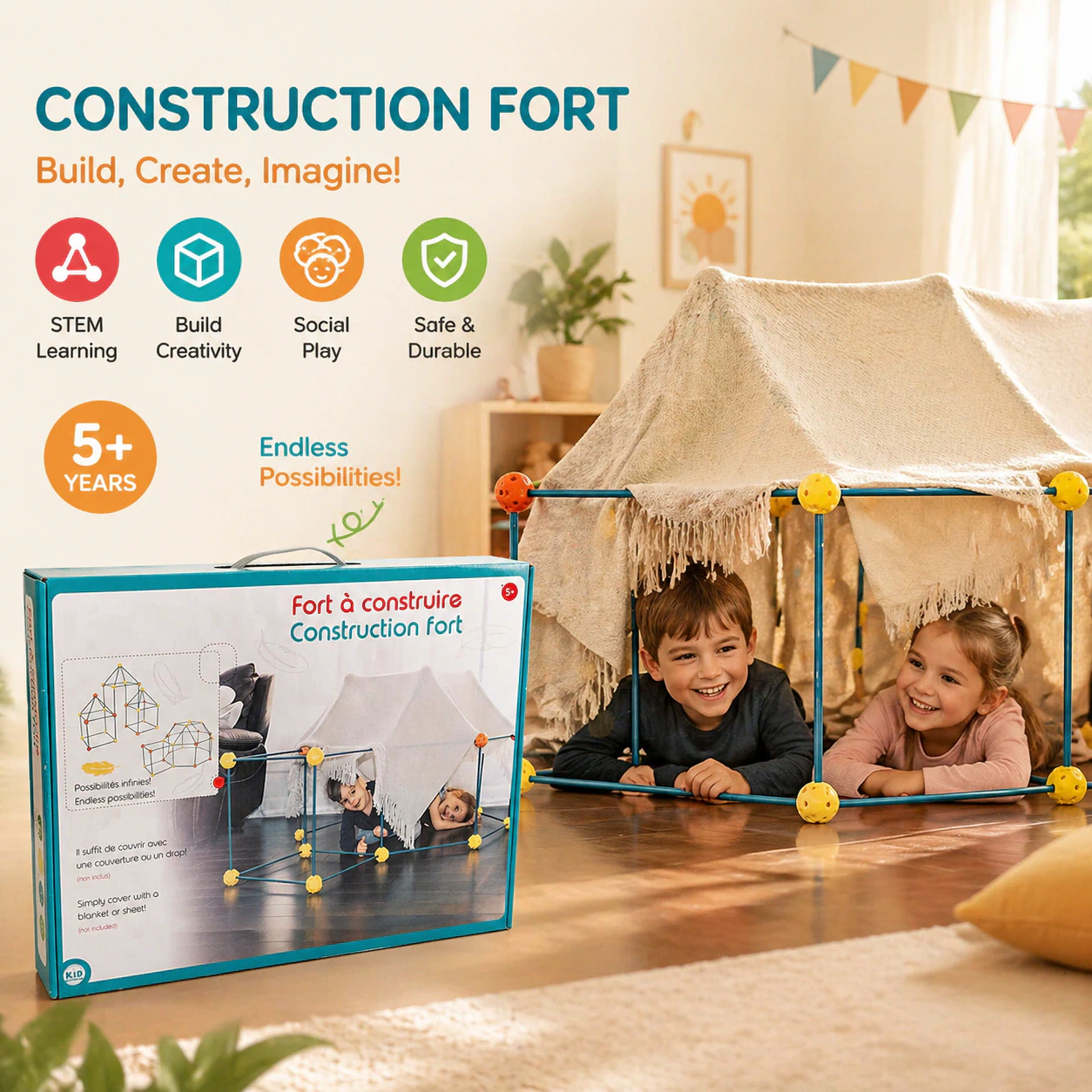
A good assortment page might show three builds: a simple tent for younger children, a tunnel for active play, and a covered base for reading or pretend play. Those examples make the product understandable, while the copy can explain that the same pieces support many other layouts.
For retail teams, this balance is useful. The product feels clear enough for shelf communication but not locked into a one-time result. That is where open-ended construction toys can sit between classic blocks and larger role-play items.
Why mid-size kits often carry the range
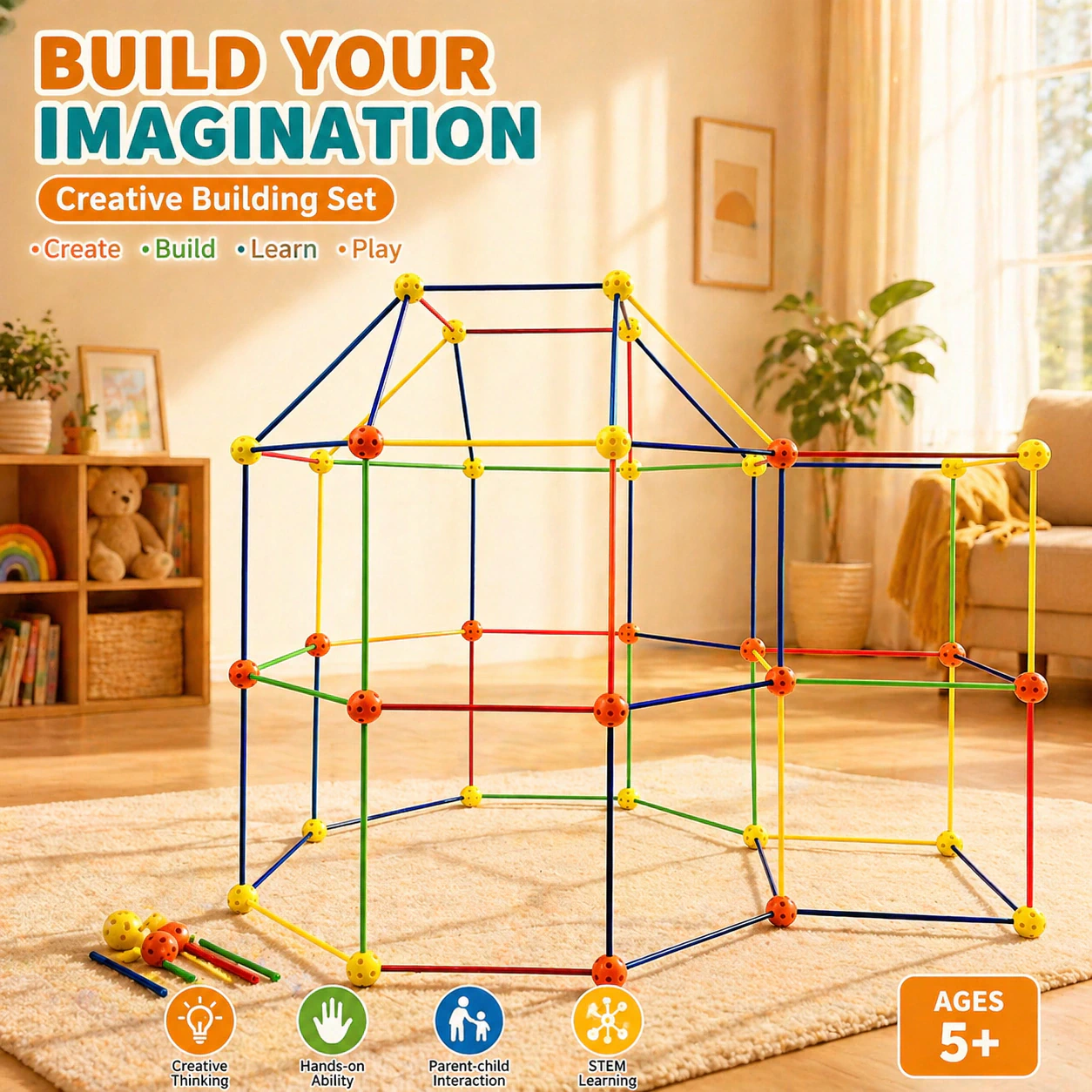
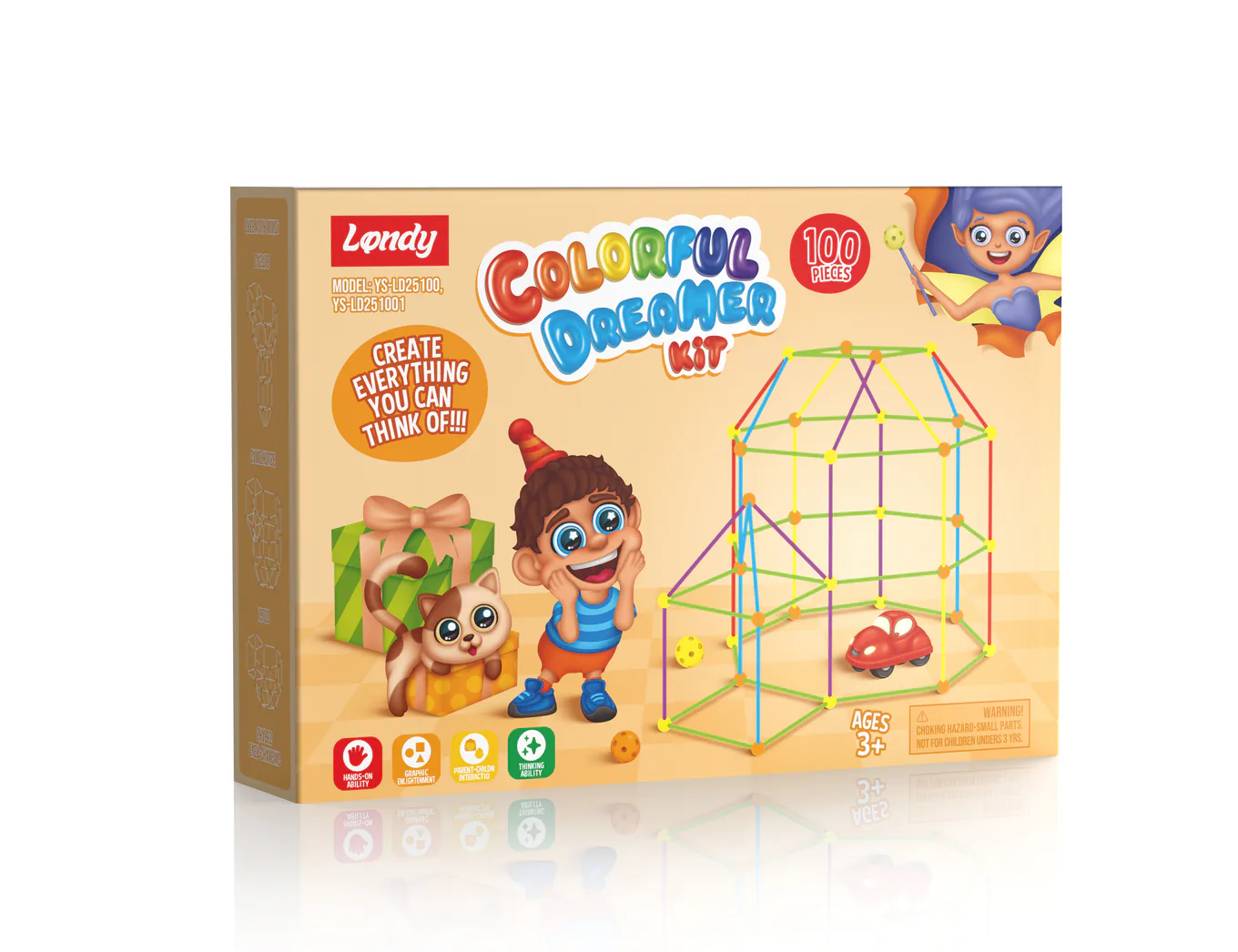
Starter kits are easy to try, and large kits create stronger visual impact. Mid-size sets often carry the assortment because they balance price, box size, completion rate, and play value. A 100-piece fort kit gives enough structure for visible builds without making the first experience too long.
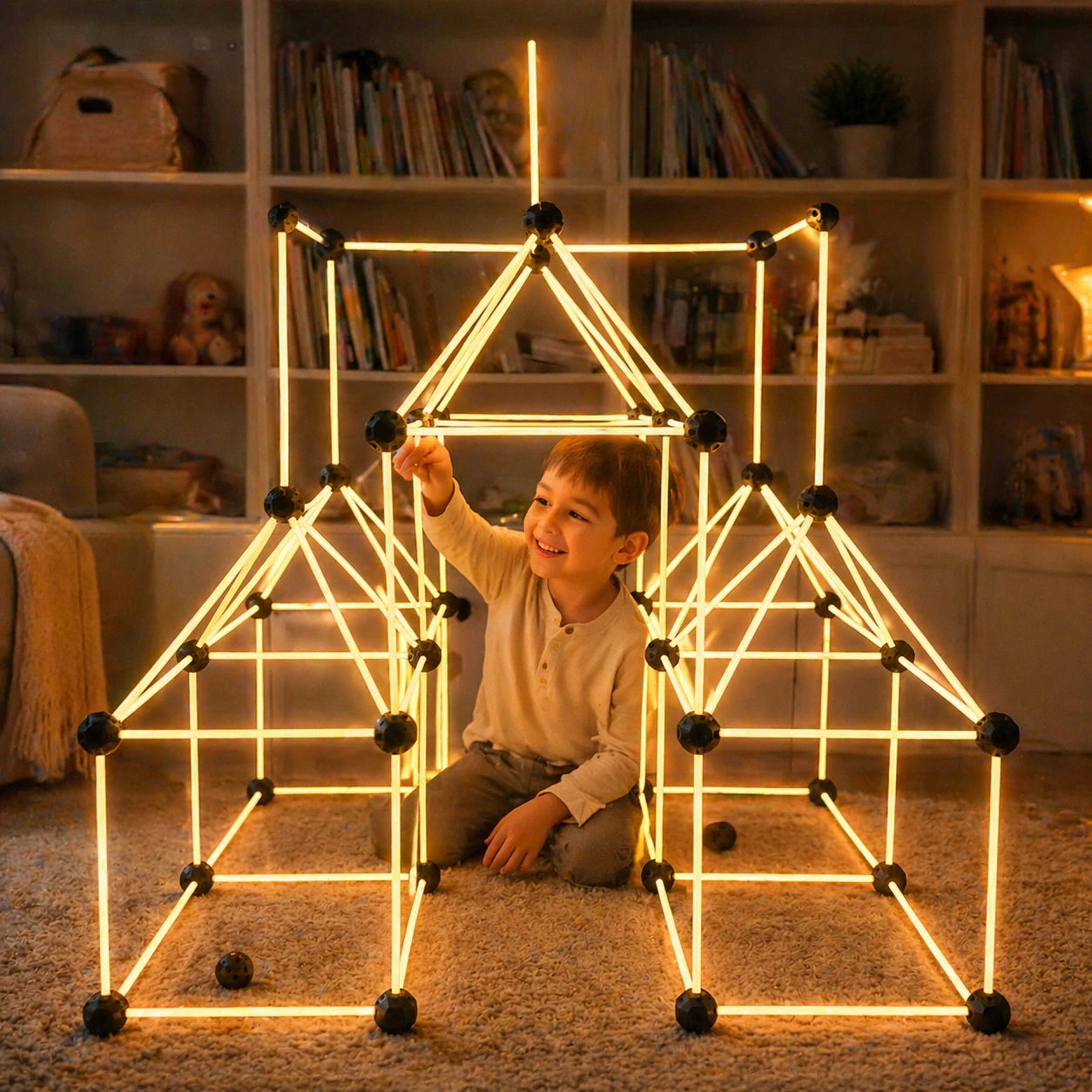
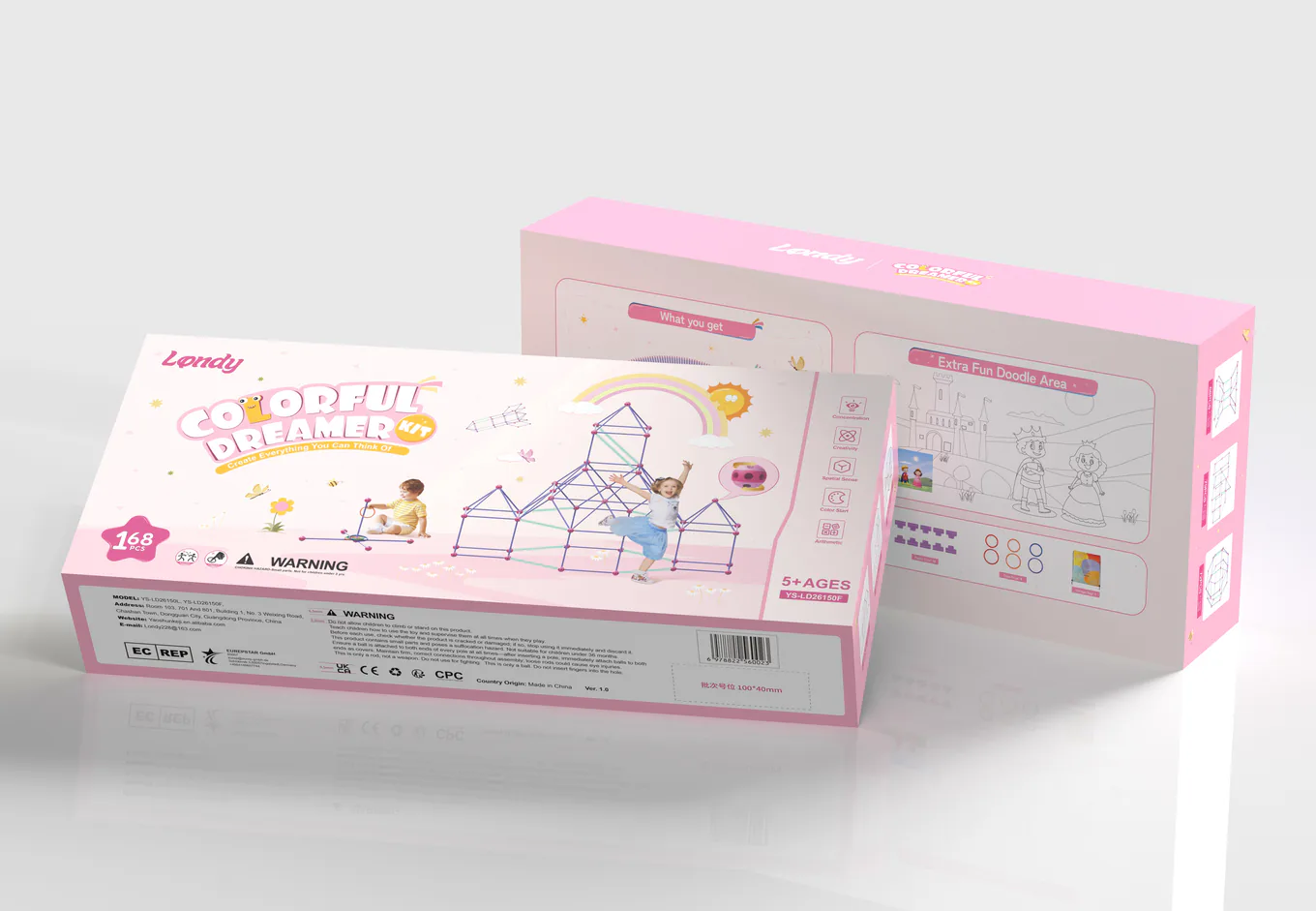
The LONDY Colorful Dreamer 100-Piece Fort Building Kit works as this kind of anchor item. It can support everyday gift positioning, family activity messaging, and introductory STEM value. For buyers planning a more eye-catching display, the LONDY Colorful Dreamer 168-Piece Glow Fort Building Kit can extend the same colorful direction into a larger glow-themed pack.
This is how assortment planning becomes practical: one system, several price points, and enough visual difference for customers to understand the ladder.
Plan the shelf scene before changing the parts
Not every retail version needs a new mold or a fully new set. Many assortment goals can be reached by adjusting piece count, color mix, box artwork, instruction cards, image direction, and accessory selection. The product should feel different enough for the channel while staying close enough to a proven base for stable production.
Buyers should decide what the shelf story is first. Is the item for first-time builders, family night, STEM learning, glow play, holiday gifting, or school activities? Once that story is clear, the supplier can recommend whether the change should happen in parts, packaging, or content.
| Shelf scene | SKU detail | Scene to show |
|---|---|---|
| Starter gift | Lower piece count and simple shapes | Easy first build |
| Family activity | Mid-size kit with clear instructions | Parent-child scenes |
| STEM learning | Shape cards and spatial language | Build, test, rebuild |
| Seasonal or glow | Theme color and box artwork | Evening play and gift value |
What Yaoshun can prepare with the buyer
Yaoshun can help buyers compare assortment options around a known product base. That includes piece-count ladder, package volume, sample timing, product images, manual style, and export documentation. The goal is to avoid treating each SKU as a separate project when the market actually needs a connected range.
For 2026 planning, a practical assortment might include a starter kit, a mid-size colorful kit, a larger family kit, and one themed glow item. This gives retail teams enough variety without creating unnecessary production complexity.