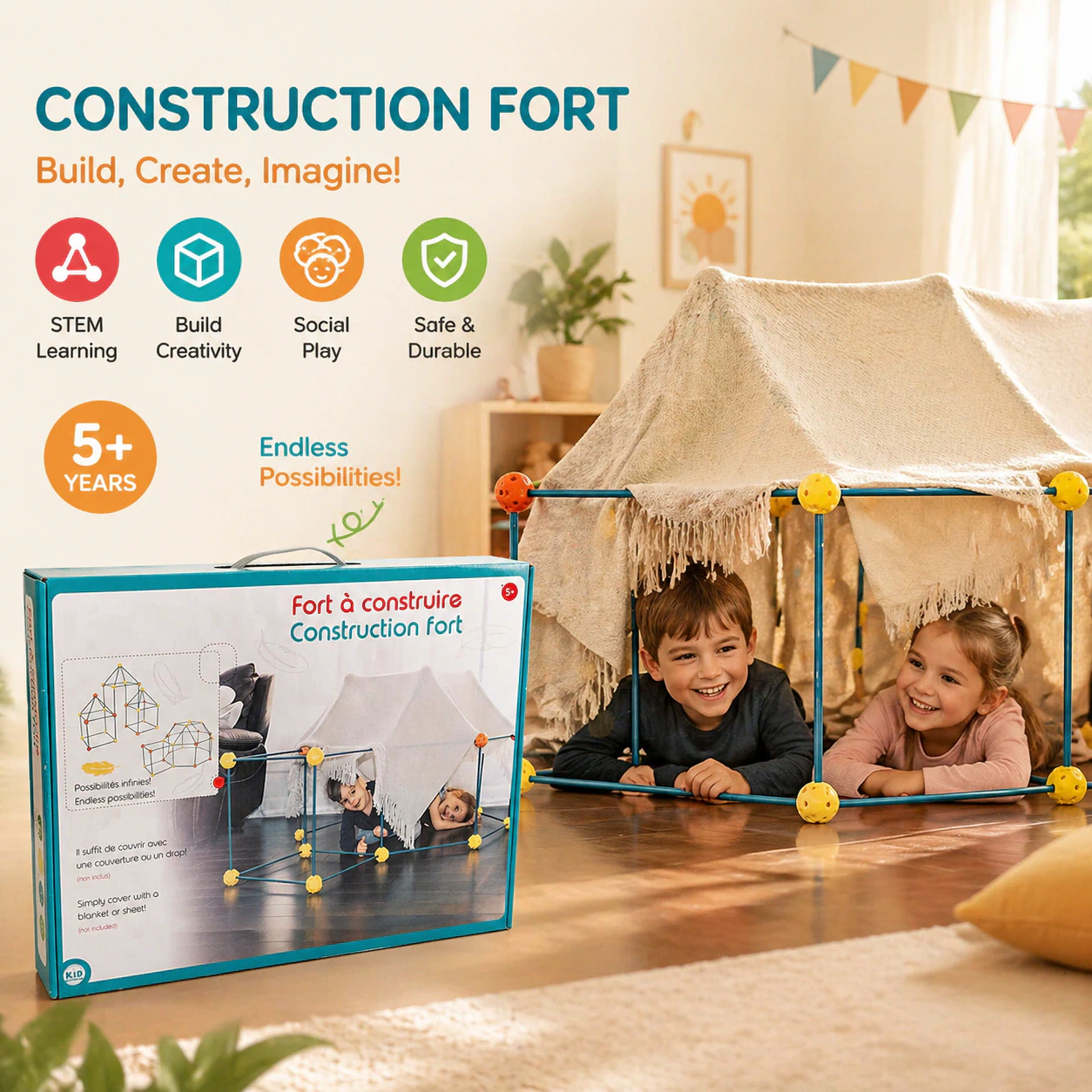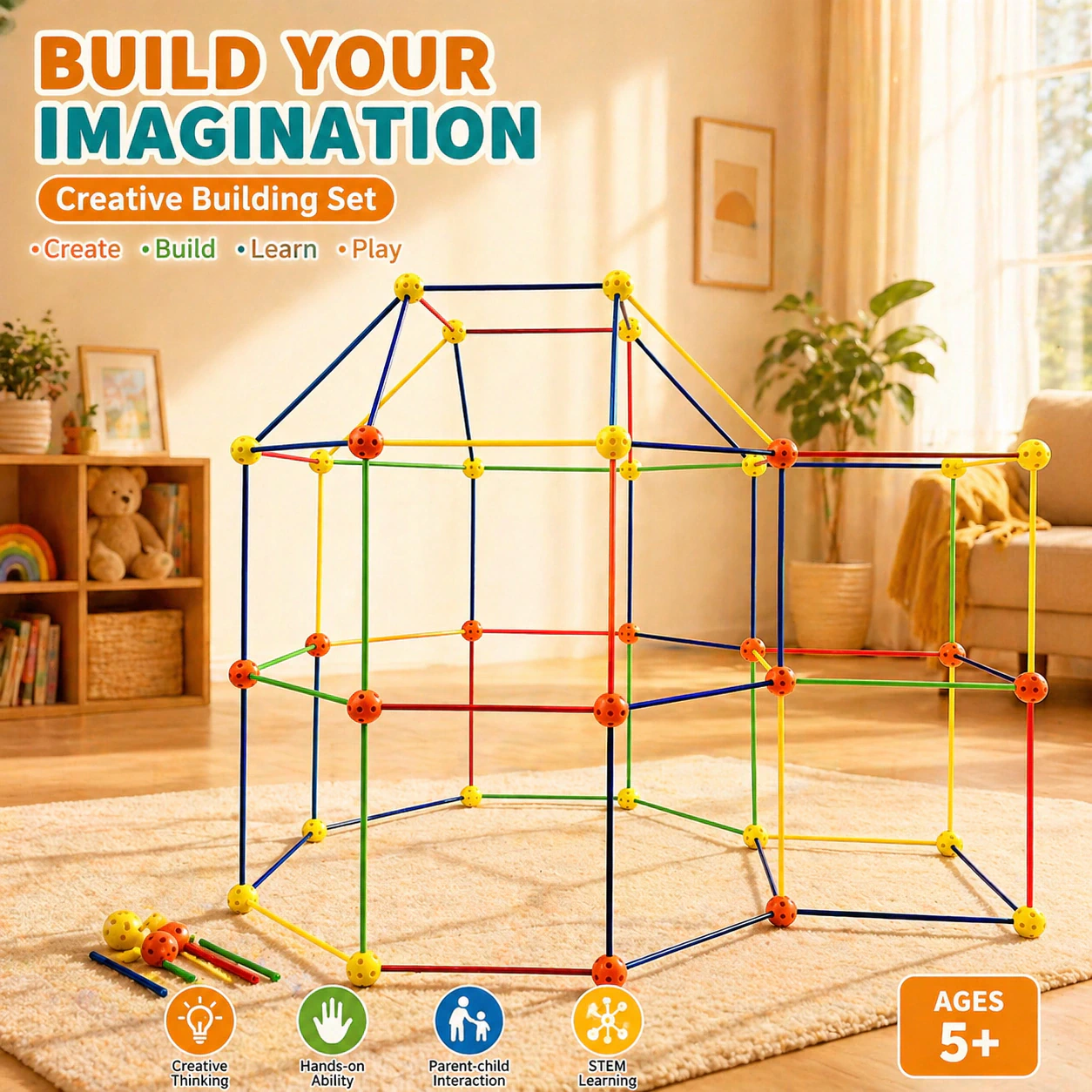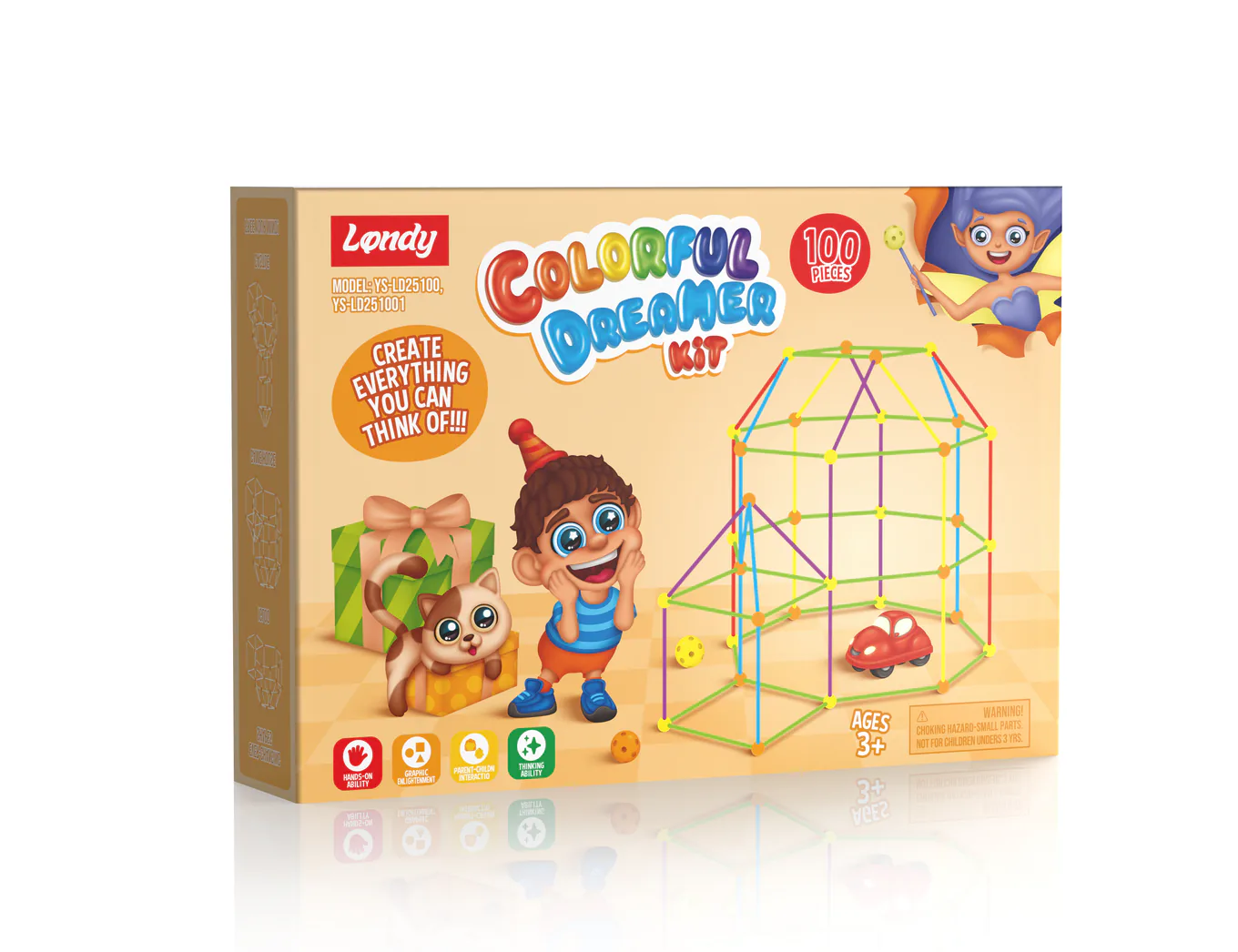
Many families do not need another complicated toy. They need a play routine that can fit between dinner and bedtime without turning the room into a long cleanup project. A glow fort kit works well in this slot because the activity has a natural sequence: build the frame, cover part of it, turn down the lights, read or tell a story, then take the structure apart together.
For packaging, listings, and short videos, this routine is useful because it gives the set a reason to come back out of the box. The set is not only a weekend project. It can become a Friday night base, a rainy-day tent, or a small family ritual that changes shape each time.
Why night play works for fort kits
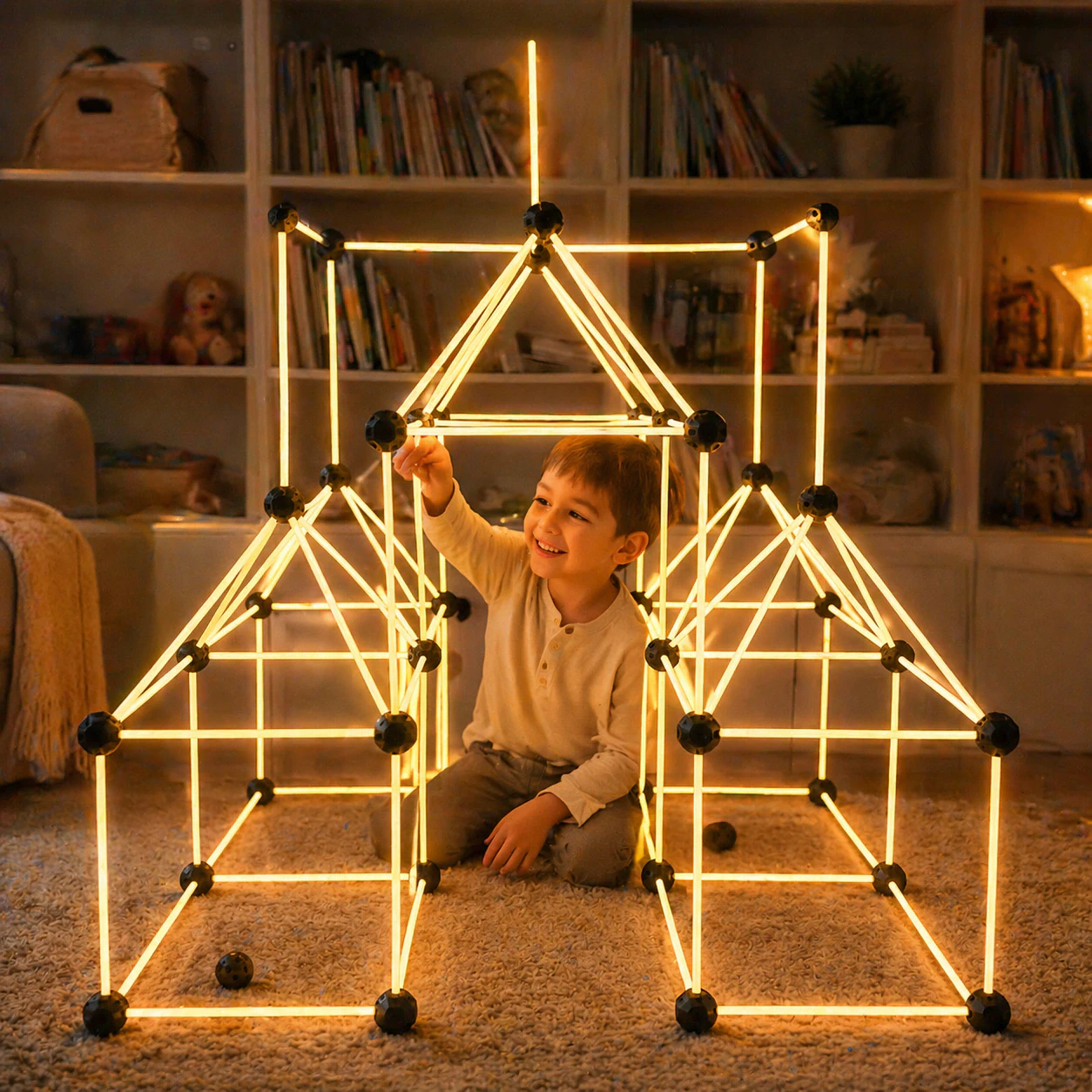
Evening play benefits from toys that are physical, quiet enough for home, and easy to turn into a story. Fort building fits because the child is not only consuming an image. They are making the room different with their hands. Glow pieces or a glow theme add a small moment of surprise without replacing the building value.
The best message is not that the toy is only for the dark. It is that the same structure changes mood when the lights go down. A frame that looked like a tent before dinner can become a moon base, reading cave, or quiet corner after bath time.
This is also where parent-child cooperation feels natural. Adults can help with roof stability, fabric placement, and cleanup. Children can choose the shape, name the base, and decide what happens inside it.
A repeatable routine keeps the set active
Repeat play often needs a pattern. Families are more likely to reuse a toy when the steps feel familiar. A fort night can be simple: choose a shape, build the base, add a cover, place two cushions, bring one book or one pretend mission, and put the parts back into the bag before bedtime.
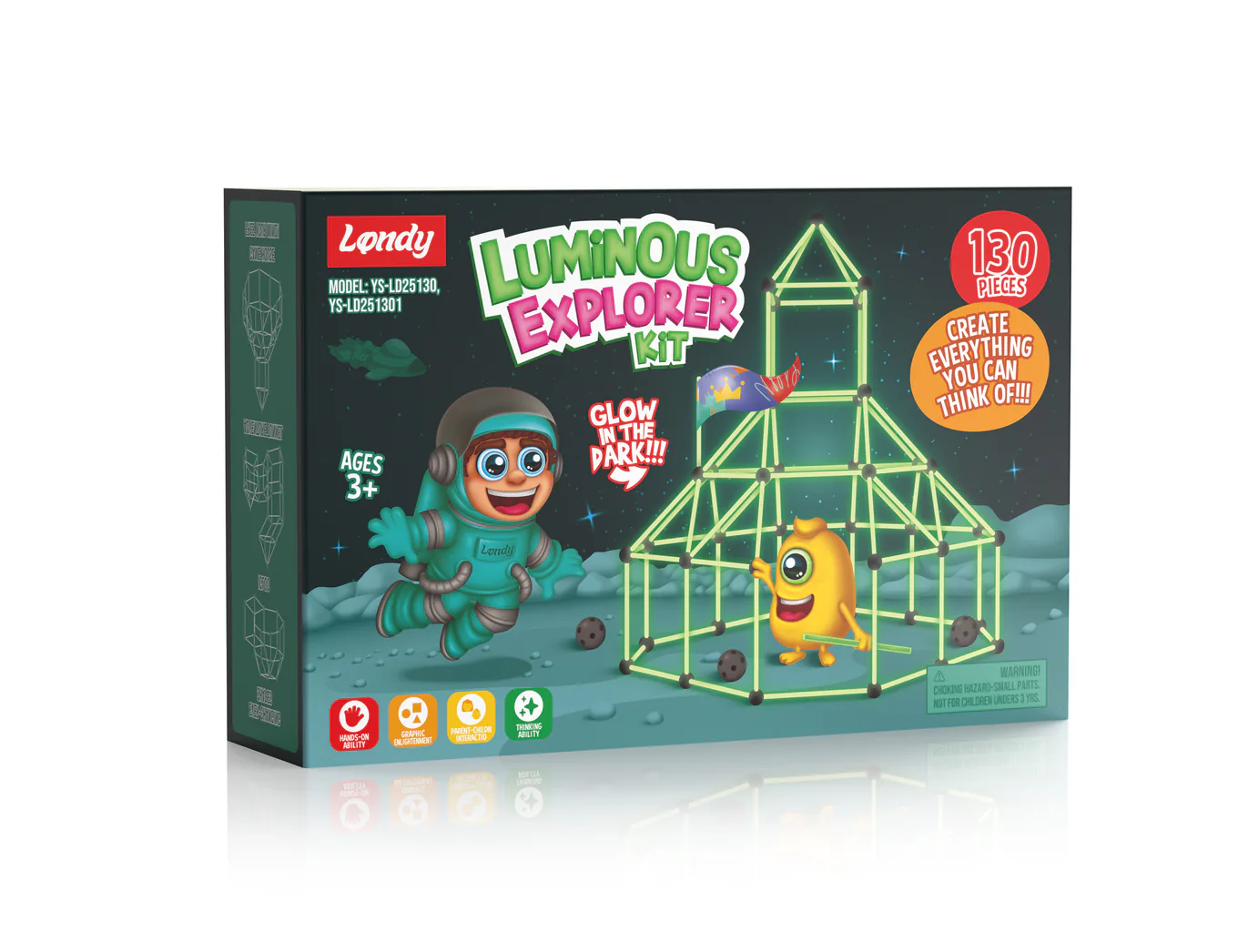
The 120-Piece Glow-in-the-Dark Fortress Building Kit gives families enough parts for a meaningful structure without making the routine too long. For brands that want a stronger space theme, the LONDY Luminous Explorer 130-Piece Glow Fort Building Kit can connect glow play with a clearer retail story.
When this routine appears on a product page, parents can immediately imagine when the toy will be used. That matters because many toy purchases fail not from lack of interest, but from lack of a clear place in family life.
What glow packaging should avoid
Glow packaging can easily overpromise. Buyers should avoid making the product look like an electronic light show if the value is really in glow parts, construction, and room play. Clear expectations protect the customer experience and make reviews more stable.
It is better to show the product in realistic home lighting, explain whether glow effect depends on light exposure, and keep the build instructions visible. If fabric or blankets are not included, the page should say so clearly. Parents appreciate knowing what is in the box and what they can add from home.
| Routine stage | Family action | Scenes to photograph |
|---|---|---|
| Build | Connect rods and balls into a simple frame | Step image and part names |
| Cover | Add a sheet or light fabric | Realistic home setup note |
| Play | Read, pretend, or tell a story inside | Lifestyle image with child scale |
| Clean up | Sort parts back into storage | Bag, box, or part layout image |
How to brief a glow series
A strong glow fort project starts with the use scenario, not only the glow material. Buyers should define whether the item is positioned as a birthday gift, holiday product, STEM kit, family activity, or e-commerce exclusive. The answer affects piece count, box artwork, image content, and instruction tone.
Yaoshun can help compare a standard glow configuration with a custom theme, then align the sample with packaging claims and page content. For repeat play, the strongest project is usually the one that families can understand in one minute and rebuild in many ways.