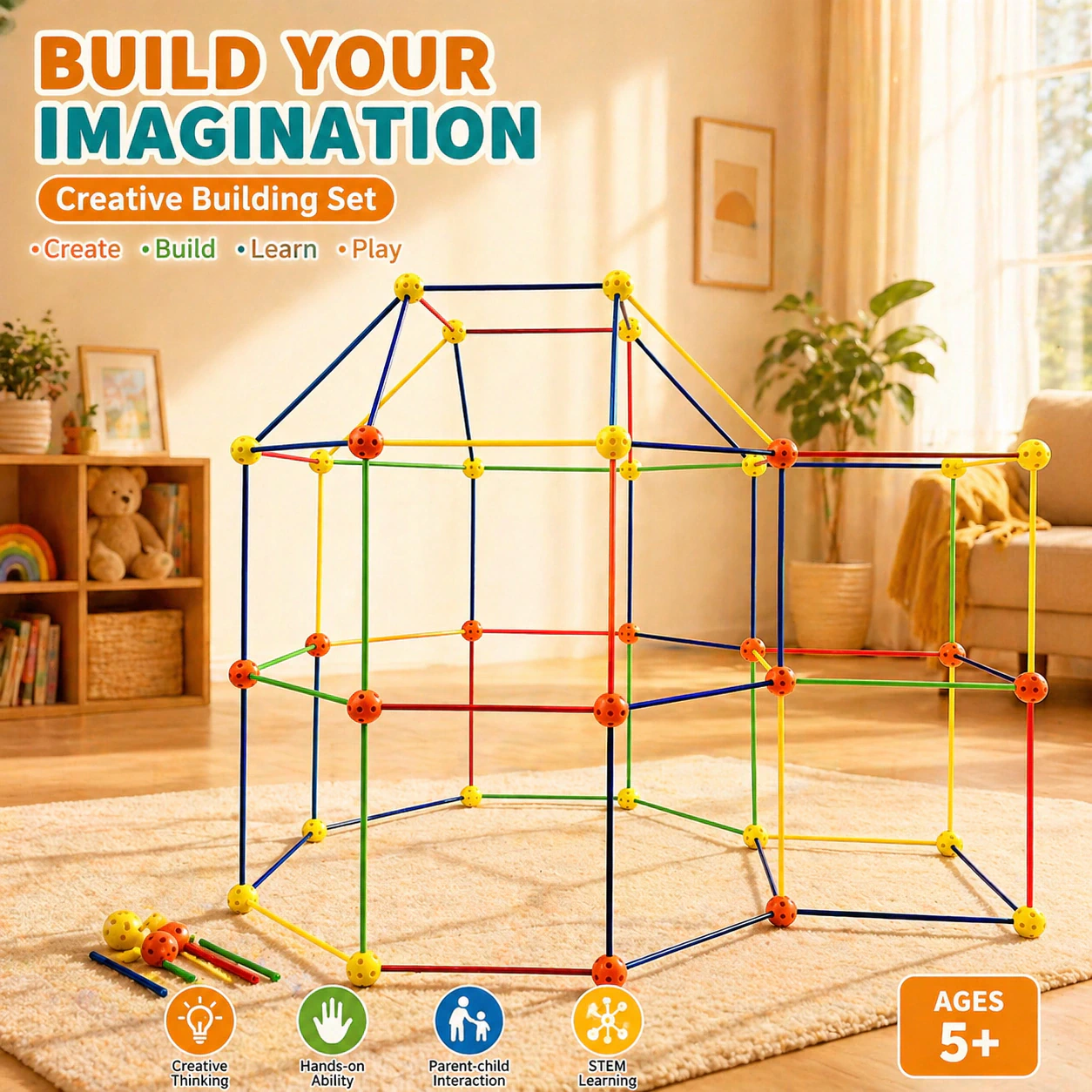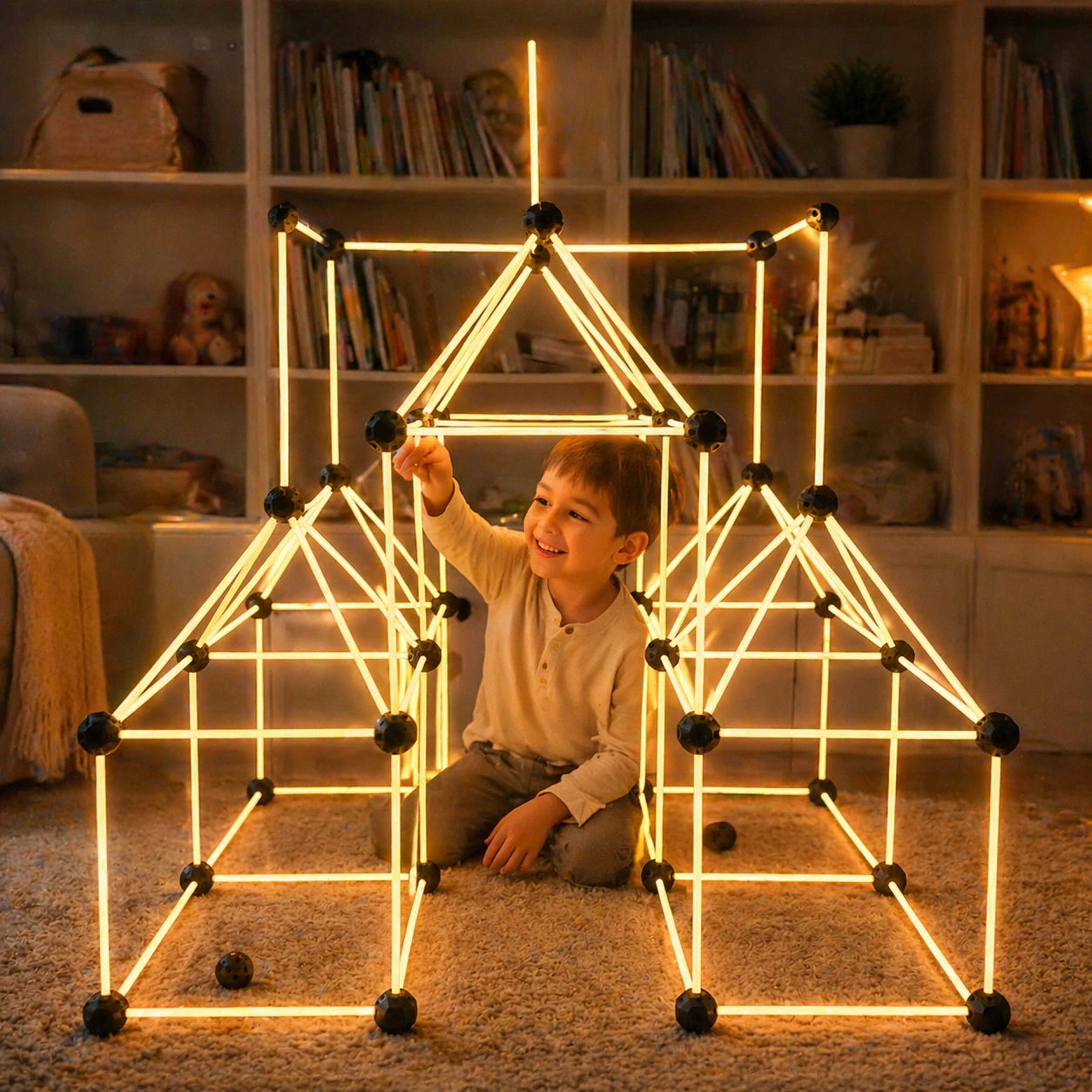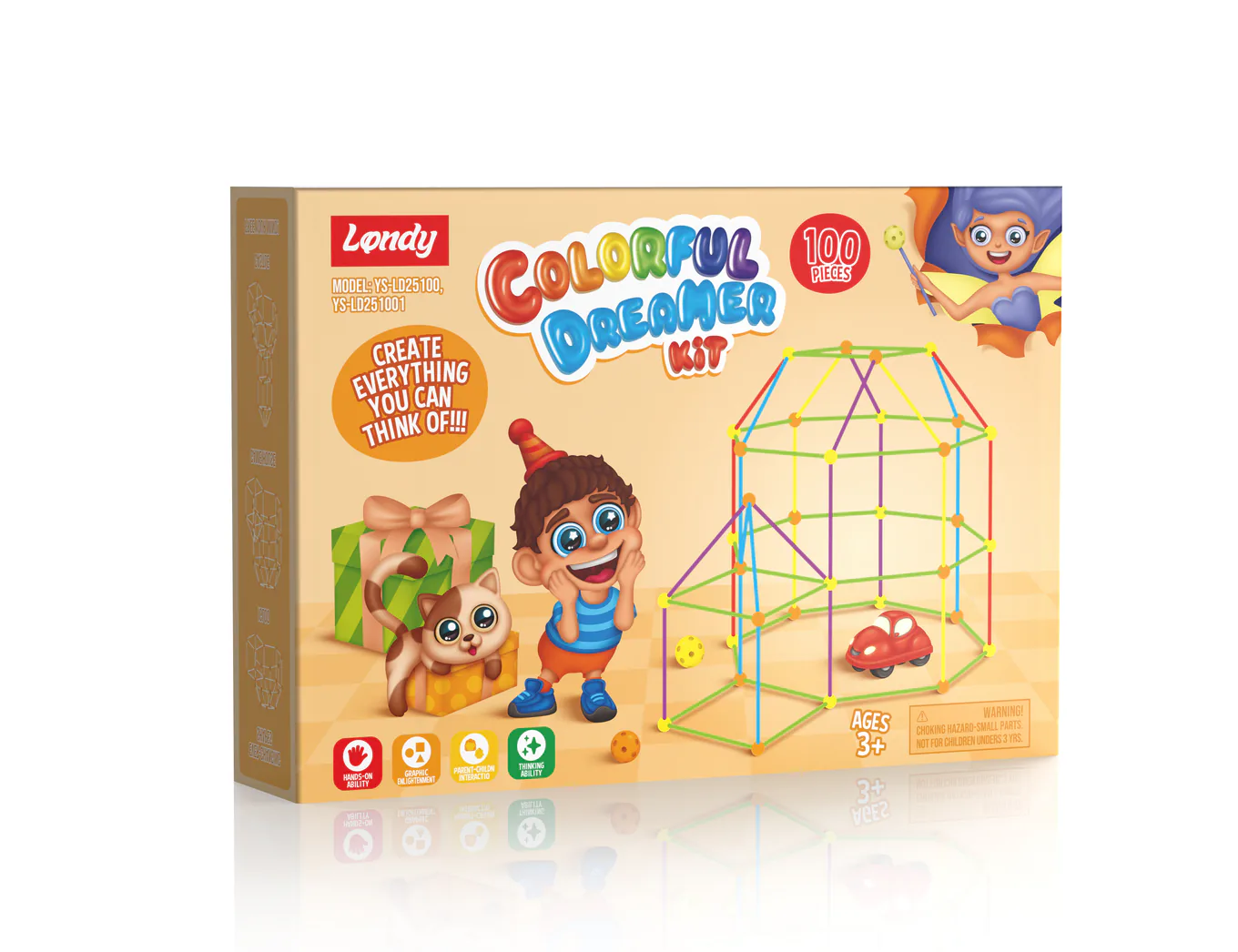
Block play usually begins on a floor mat or table. A child stacks, compares, knocks down, and tries again. Fort building keeps that same construction logic, but changes the scale. The finished work is no longer only something to look at. It becomes a space children can crawl into, decorate, defend, repair, and use for a story.
That shift is easy to understand in a real room: parents can see the finished shape across the floor, and children can keep using it after the build is complete. A fort kit is still a construction toy, but the strongest scene is not only the build. It is the moment after the frame is finished, when the structure becomes a reading tent, a pretend shop, or a small base for stories.
Why scale changes the play
Small blocks teach balance, sequence, comparison, and planning. Fort building asks for the same thinking, then adds body-sized decisions. The child must judge whether the entrance is high enough, whether the roof can carry a blanket, whether two walls leave enough room inside, and whether the frame will stay steady after someone crawls through it.
Those questions make the play more concrete. A weak corner is not an abstract mistake; the whole roof leans. A short rod is not only shorter on paper; it changes whether the base feels open or crowded. Children get immediate feedback from the structure and then adjust it with their hands.
For product photos and packaging, the message should not stop at piece count. Show what the pieces become: a tent, a reading base, a pretend shop, a rescue station, or a quiet corner. The visible result helps parents understand why a set of rods and balls can stay interesting after the first build.
The finished fort becomes a second toy
Many construction toys end when the model is complete. A fort kit often begins again at that point. Children bring cushions, clips, fabric, books, flashlights, signs, and pretend roles into the space. One build may become a rocket in the morning and a private library after dinner.
This matters for repeat play. When the structure is large enough to enter, it carries social value. Children negotiate where the door should be, who sits inside, which side is the shop counter, and how to rebuild when the roof droops. Those conversations are part of the product experience, not a side effect.
The 120-Piece Secret Base Fort Building Kit works well for this kind of story-led play because it gives families enough parts for stronger shapes without pushing the set into an oversized storage problem. For tighter rooms or first-time buyers, the 72-Piece Secret Base Fort Building Kit keeps the same system in a lighter entry format.
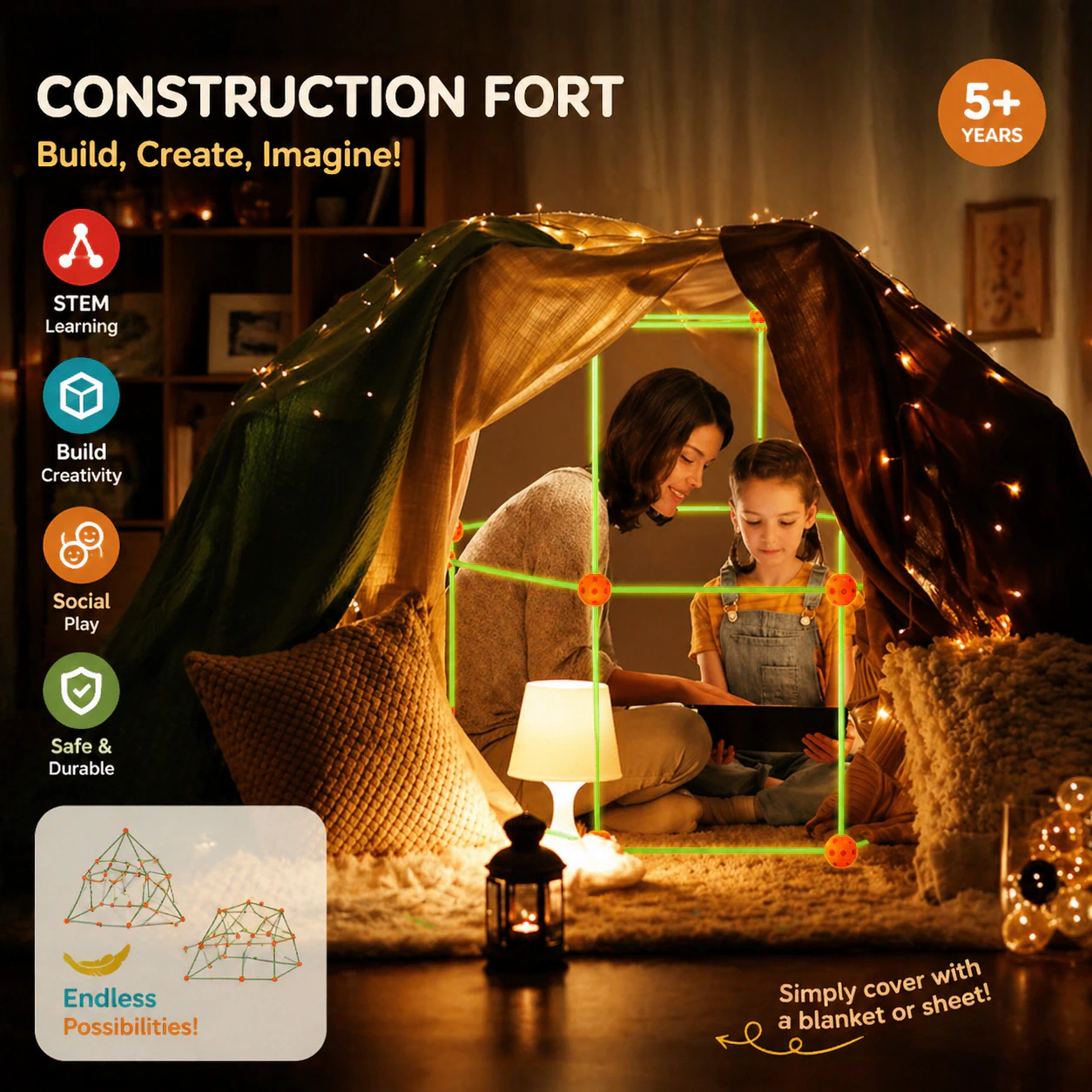
Photograph the path from parts to play
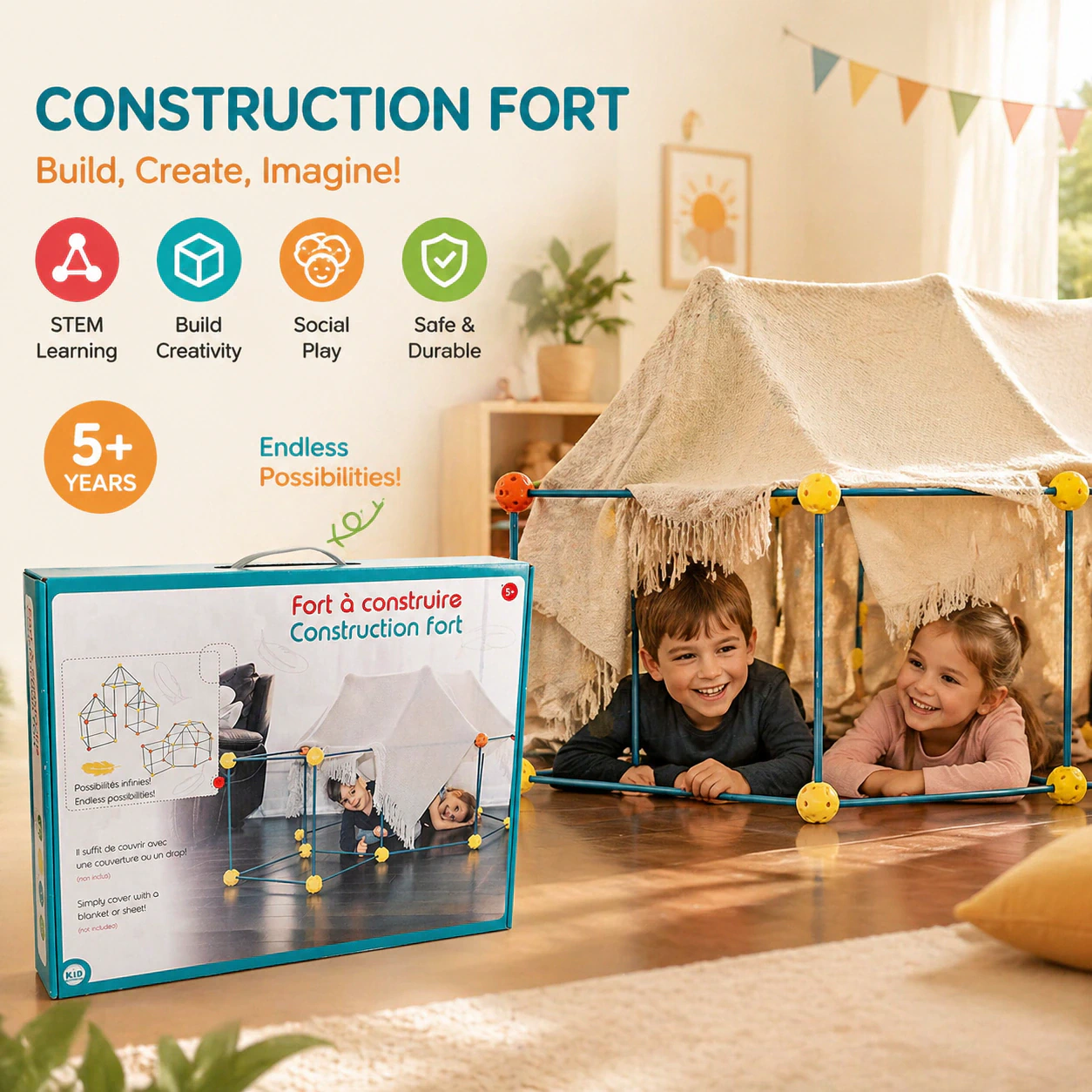
A fort building article, listing, or box panel works best when it shows the path from parts to use. A clean flat-lay of rods and connector balls is useful, but it cannot carry the full value. The image set should include a basic frame, a child-height entrance, a covered fort, and a child using the finished build for reading or pretend play.
Age range also needs practical explanation. Younger children may need help pushing rods into connectors and choosing a stable base. Older children can handle more open layouts, two-room structures, and rebuilding challenges. If that progression is visible, the product feels less like a pile of parts and more like a toy children can actually enter.
| Scene to photograph | What the scene shows | Natural takeaway |
|---|---|---|
| Parts layout | Piece count and included components | Shows what is in the box |
| Basic frame | How rods and connector balls work | Makes the first build easier to imagine |
| Covered fort | Real room-sized result | Connects construction with usable play |
| Child inside | Scale and repeat play | Shows the toy after construction |
How Yaoshun makes this category concrete
For OEM and private-label projects, Yaoshun treats fort kits as both a construction system and a family play product. Piece count, rod length, connector fit, packaging volume, instruction clarity, and image content should be planned together. A good set is not only larger; it is easier to understand, easier to rebuild, and easier to show with real play scenes.
Customers planning a room-sized construction line can start with the secret-base series, then adjust piece count, color direction, package language, and image needs around the target market. The goal is to give families a first build they can finish and a second build they want to try.