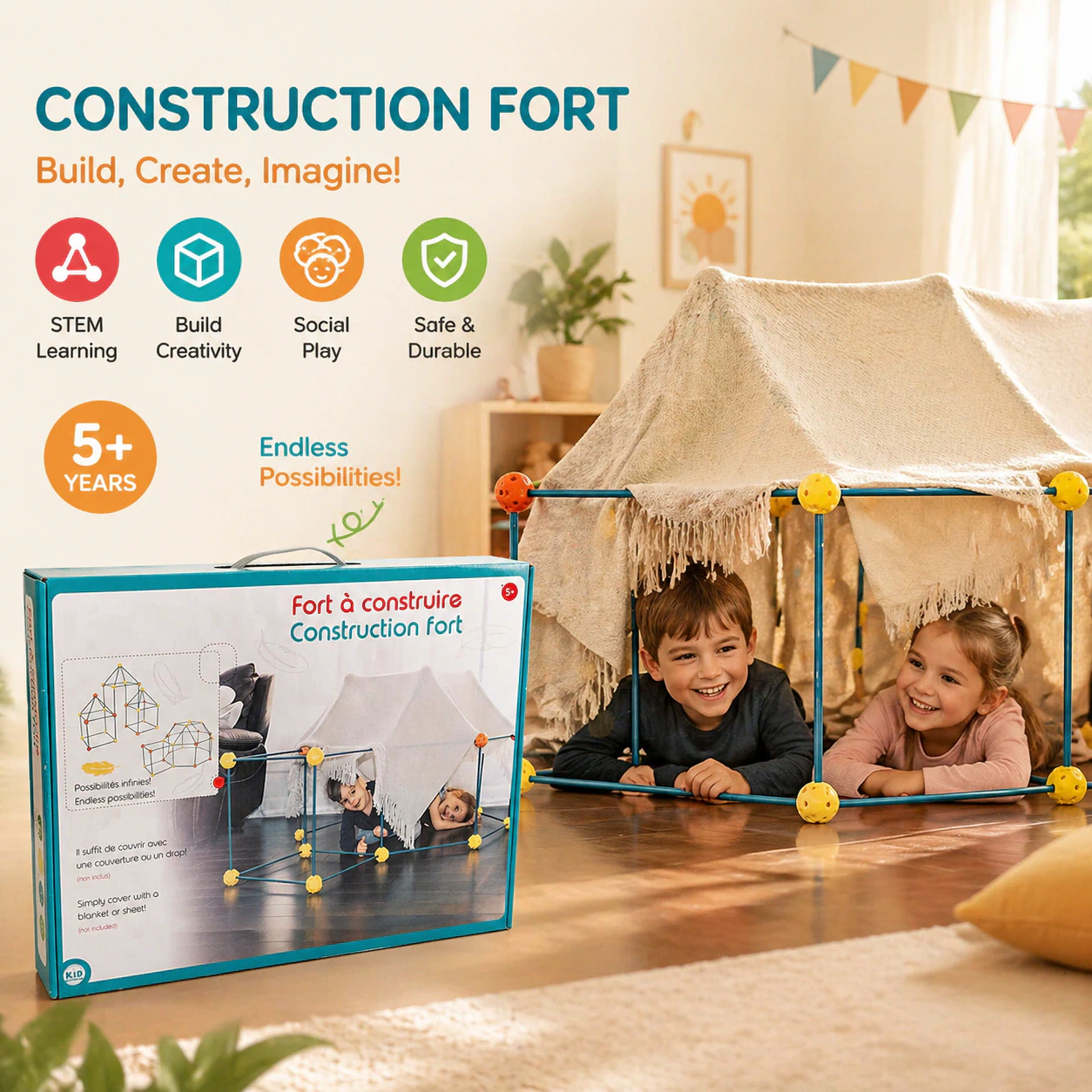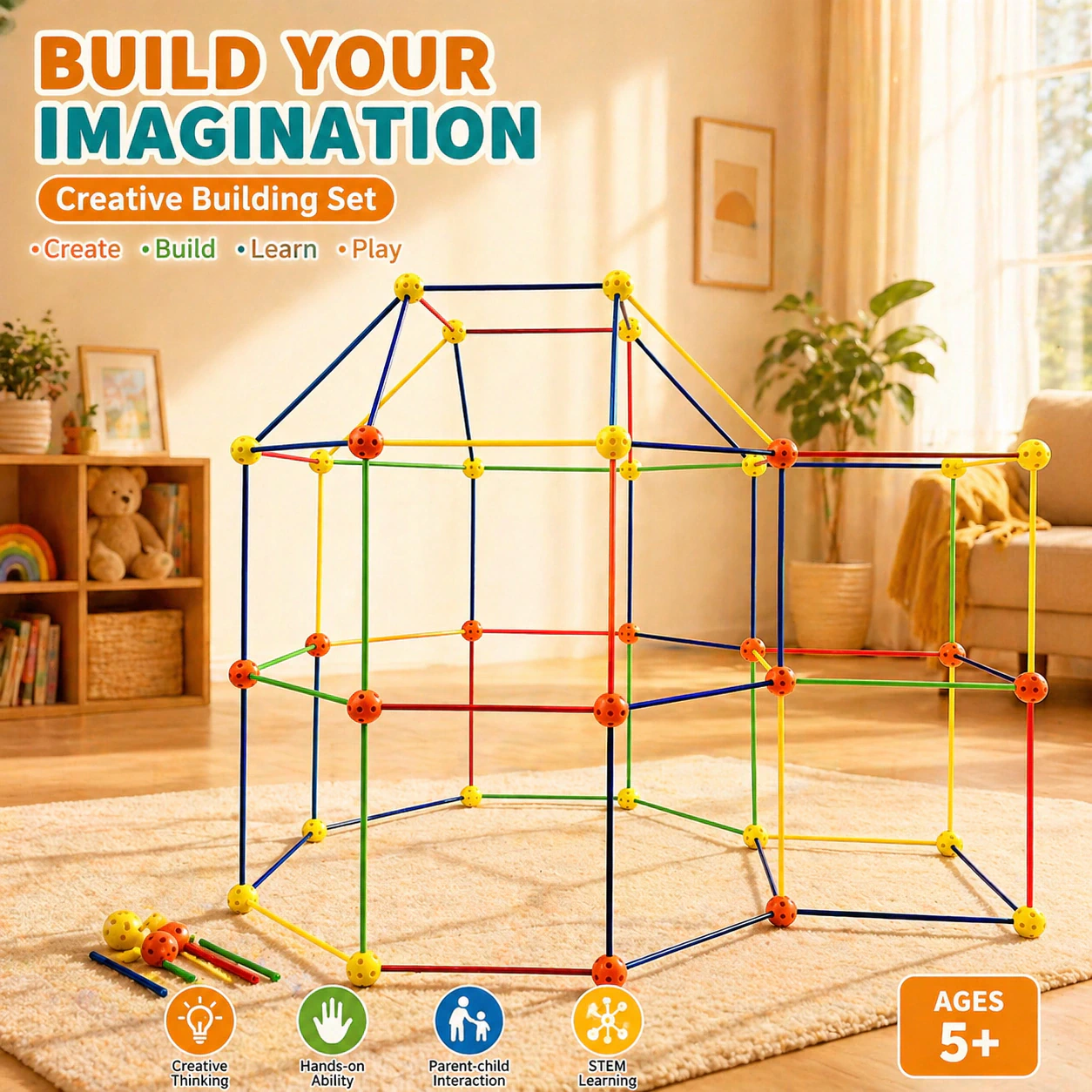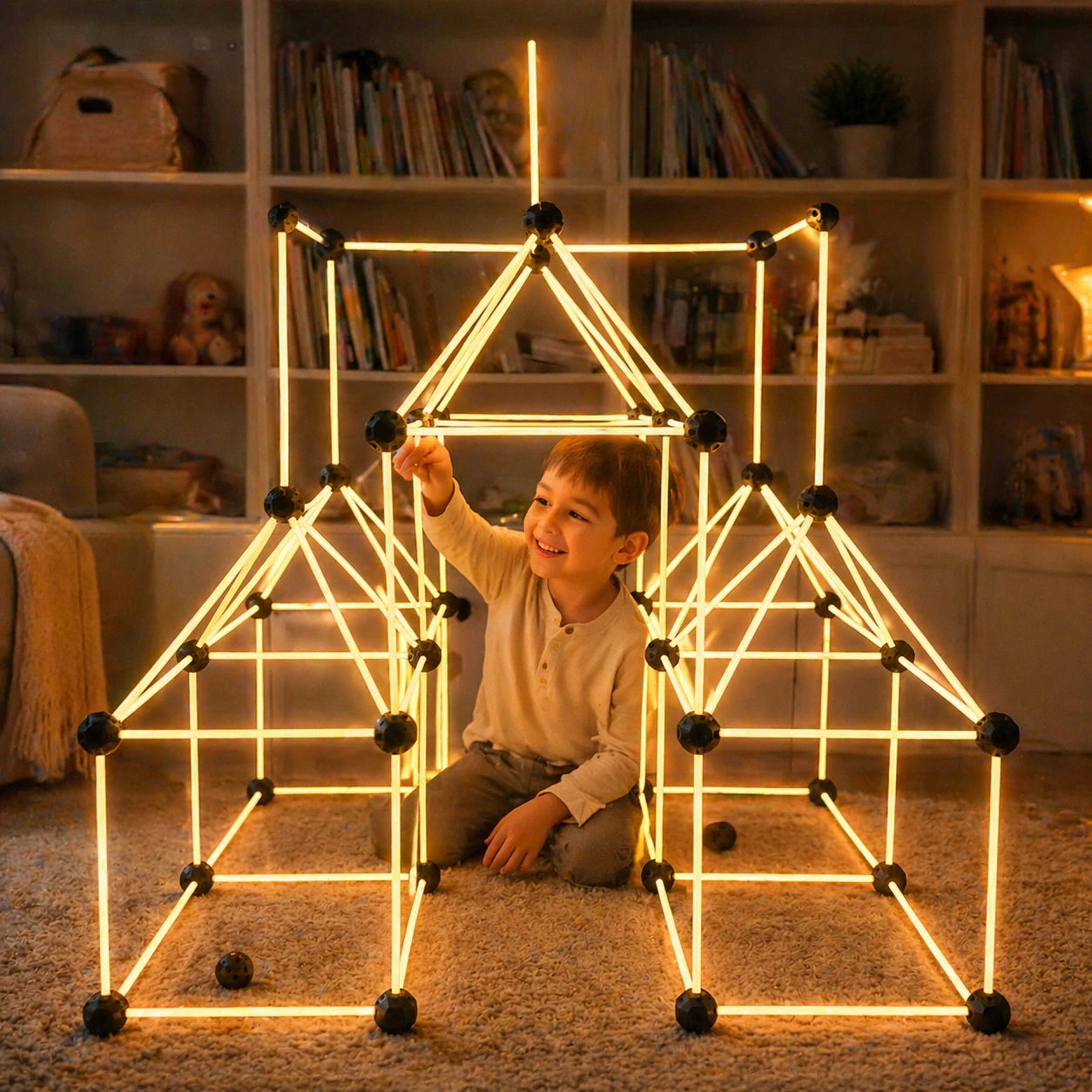
Sustainable toy buying is often discussed through materials and packaging. Those details matter, but family behavior matters too. A toy that is used often, rebuilt in many ways, stored properly, and passed between siblings can deliver more value than a product that feels exciting for one afternoon and then disappears in a closet.
Fort building kits can fit this longer-use pattern when they are planned carefully. The important factors are not only whether the parts are strong. Buyers should also look at connector fit, rod consistency, storage, instruction variety, and whether the product can support new builds after the first week.
Durability is a play experience
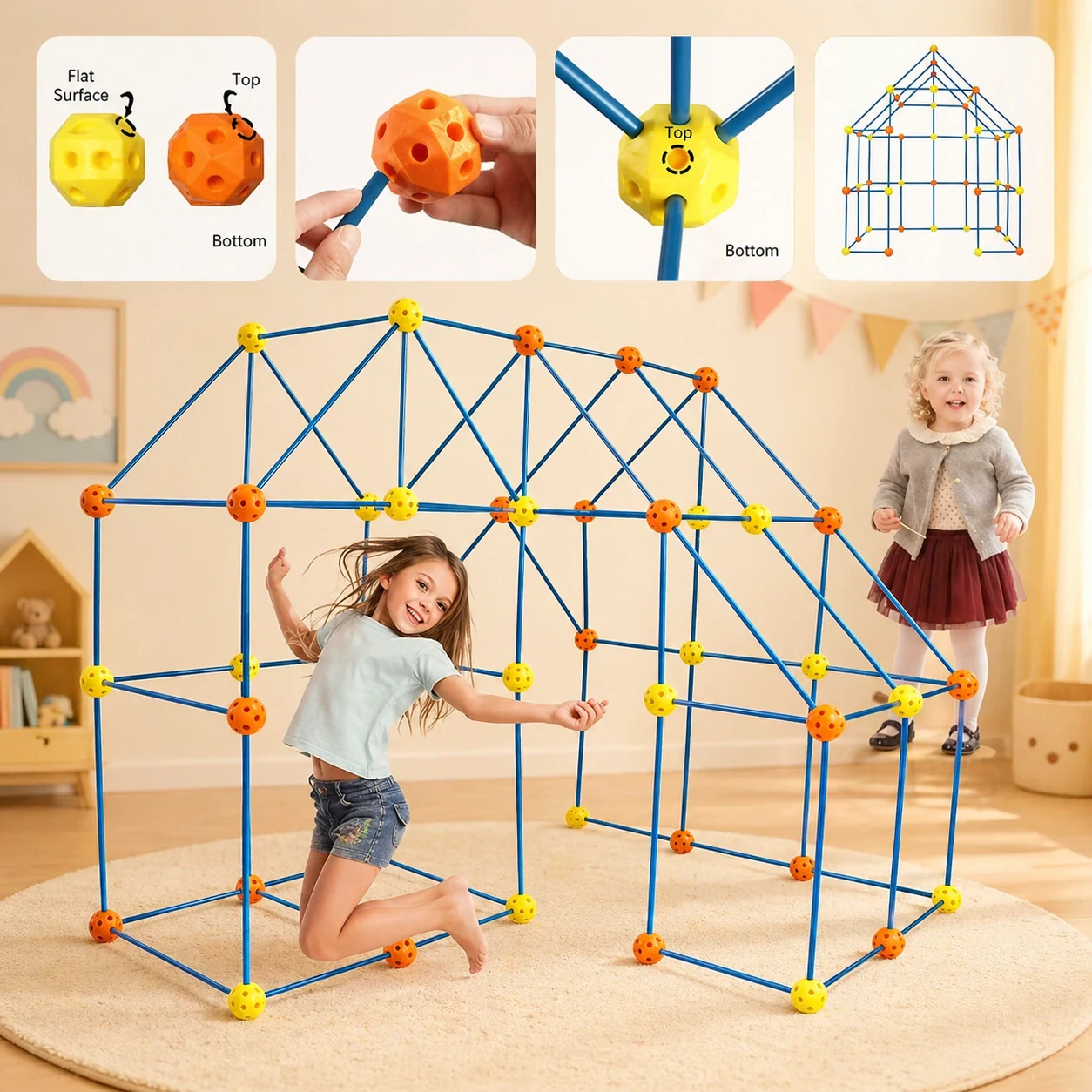
Durability is not only a technical claim. Children feel it when rods connect firmly, corners hold, and the frame can be rebuilt without parts becoming loose too quickly. Parents feel it when cleanup is manageable and the set remains complete after several uses.
A durable fort kit gives families permission to experiment. If a child worries that a connector will crack or the structure will fail after one mistake, the play becomes cautious. When the system feels stable, children are more willing to test, rebuild, and invite others into the activity.
Durability is easier to believe when the photos show practical scenes: repeated assembly, covered tents, storage after play, and multi-child use. These images are more convincing than a vague long-lasting claim.
Storage keeps the set in use
Open-ended toys can lose value when parts scatter. A storage bag, clear part count, and simple cleanup routine can make the difference between a toy that stays active and one that becomes incomplete. This is why storage should be part of the product brief, not an afterthought.
The 158-Piece Secret Base Fort Building Kit with Storage Bag is useful for larger family play because storage is already part of the proposition. A smaller gift set such as the 100-Piece Creative Fort Building Gift Set can use packaging and instructions to teach the same cleanup habit at a lighter scale.
When families know where the parts go, they are more likely to rebuild the set next weekend.
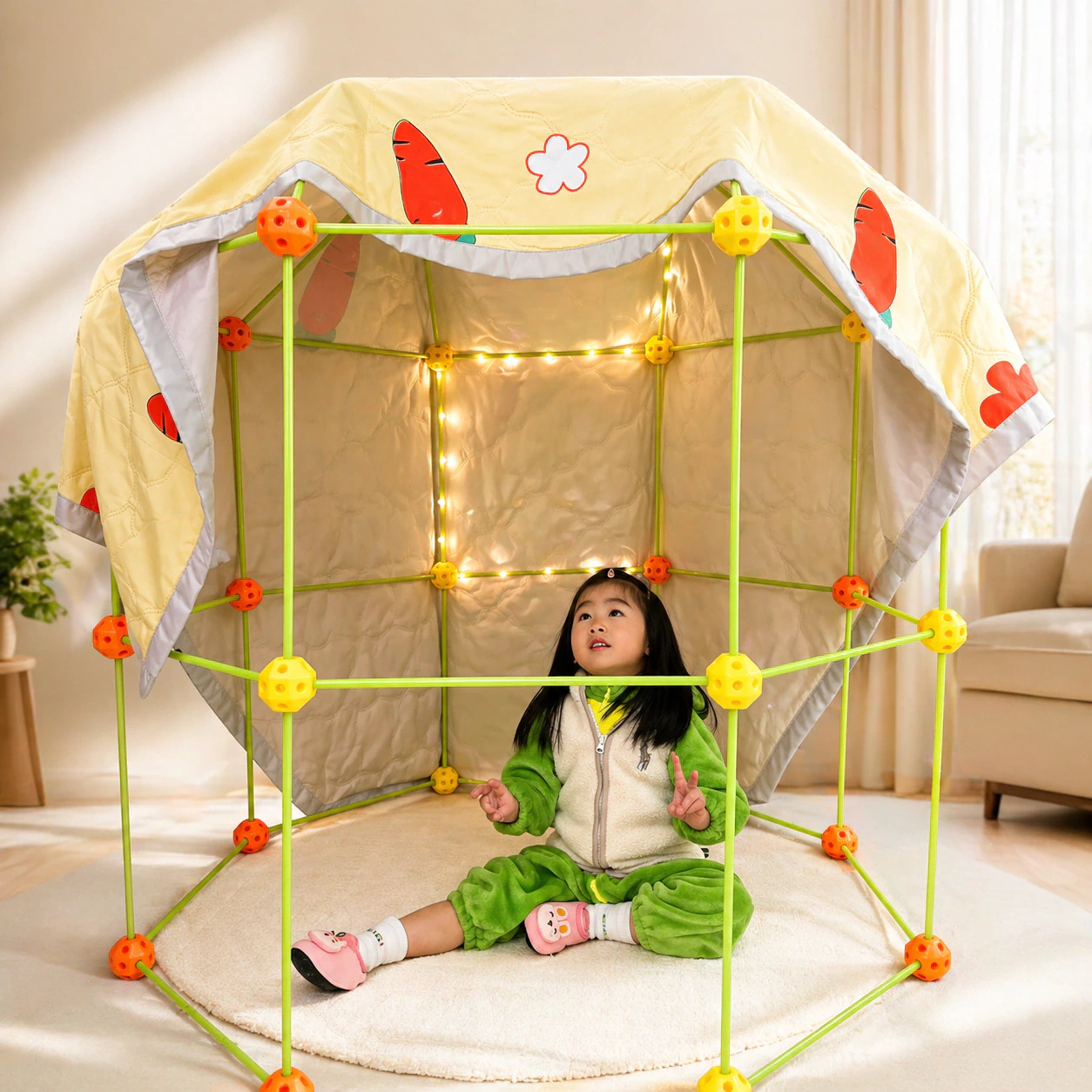
Make long-term use visible
Product copy should avoid treating sustainability as a slogan. For fort kits, a more credible message is long-use design: durable parts, many rebuilds, storage support, family sharing, and fewer single-use play moments. This does not require heavy language. It requires concrete proof.
Buyers can ask for images showing parts after assembly, the storage solution, and several builds made from the same set. If replacement parts or accessory packs are part of the business model, that can also be explained clearly.
| Long-use factor | What to check | How to photograph it |
|---|---|---|
| Part strength | Rod and connector fit after repeated use | Assembly and close-up images |
| Rebuild variety | Number of realistic shapes from one set | Multiple build examples |
| Storage | Bag, box, sorting, cleanup routine | Parts packed away after play |
| Family sharing | Room for siblings or parent-child play | Group-use scene |
How Yaoshun plans durable kits
Yaoshun can help buyers review rod material, connector structure, piece count, storage option, and packaging direction together. For a durable family product, the factory discussion should include not only the first impression but also what happens after five or ten uses.
A longer-use fort kit can support a stronger brand promise because it does not depend on novelty alone. It gives families a reason to rebuild, store, and return to the same set in different rooms and seasons.