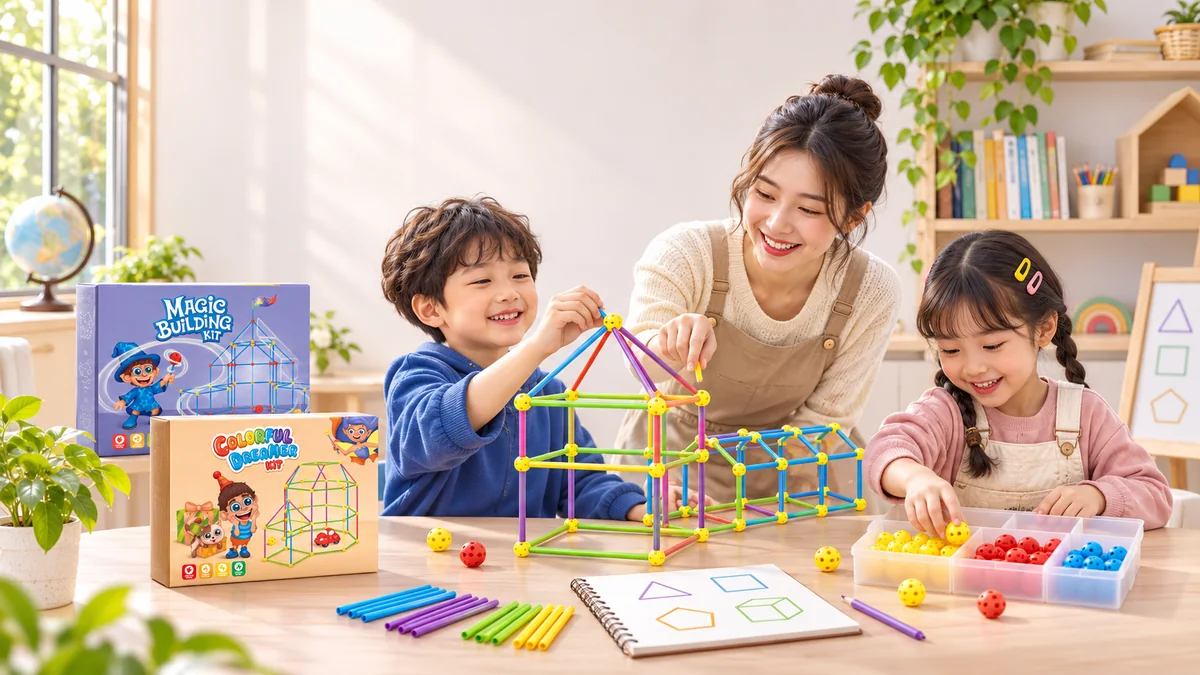
A Fort Building Kit turns a familiar childhood idea into an open-ended construction system. Rods, connector balls, clips and fabric accessories can become a castle, reading corner, tunnel, space station or secret base, then be taken apart and rebuilt for a different story.
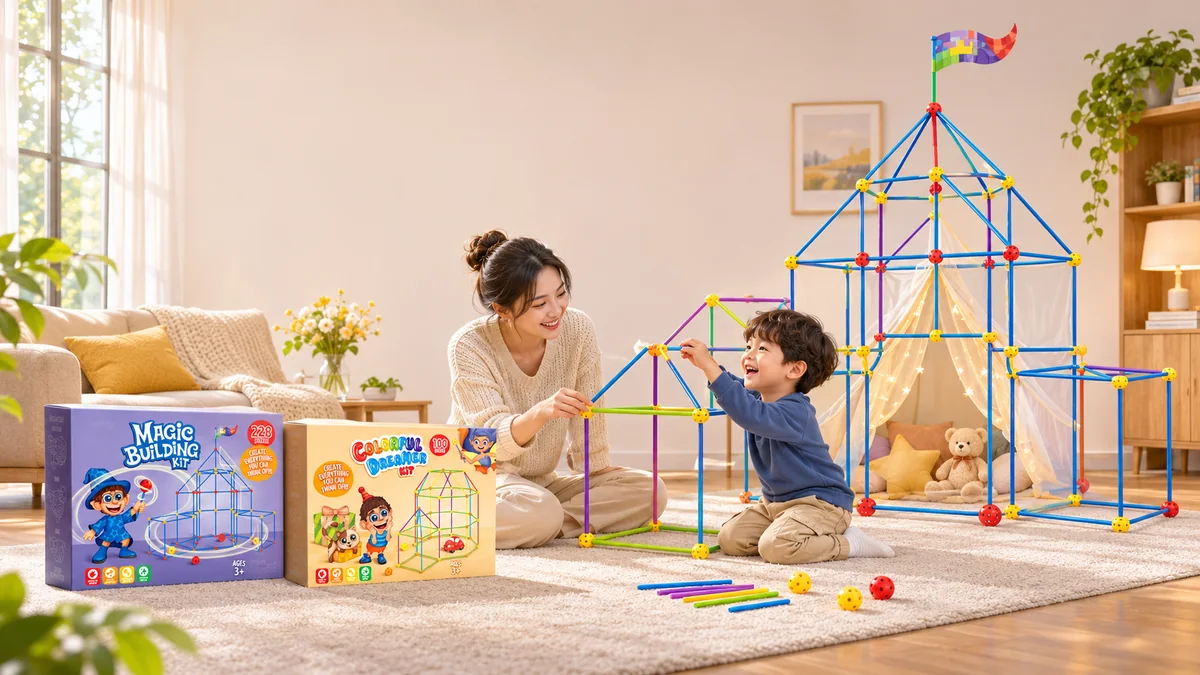
What makes a Fort Building Kit work
The rods define span, height and stability. A mix of lengths lets children move from a small frame to walls, roofs and passageways. The connector system determines how easily those ideas become real structures. Holes, insertion depth, grip and the amount of force needed to connect or remove a part all affect whether children can start independently.
Fabric covers, clips, flags and storage bags give the frame a clear use. A roof turns a structure into a den. A flag creates a castle. A cover can become a reading corner or a quiet place for pretend play. The instruction sheet and package also matter. They should explain the first steps and the safe boundaries while leaving room for children to design their own versions.
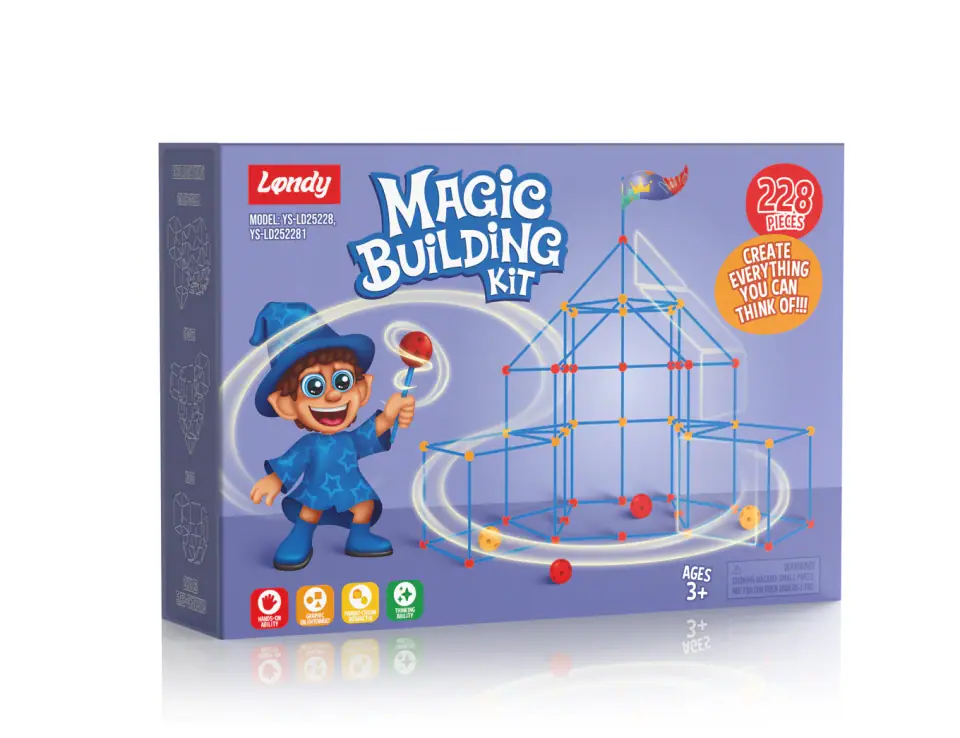
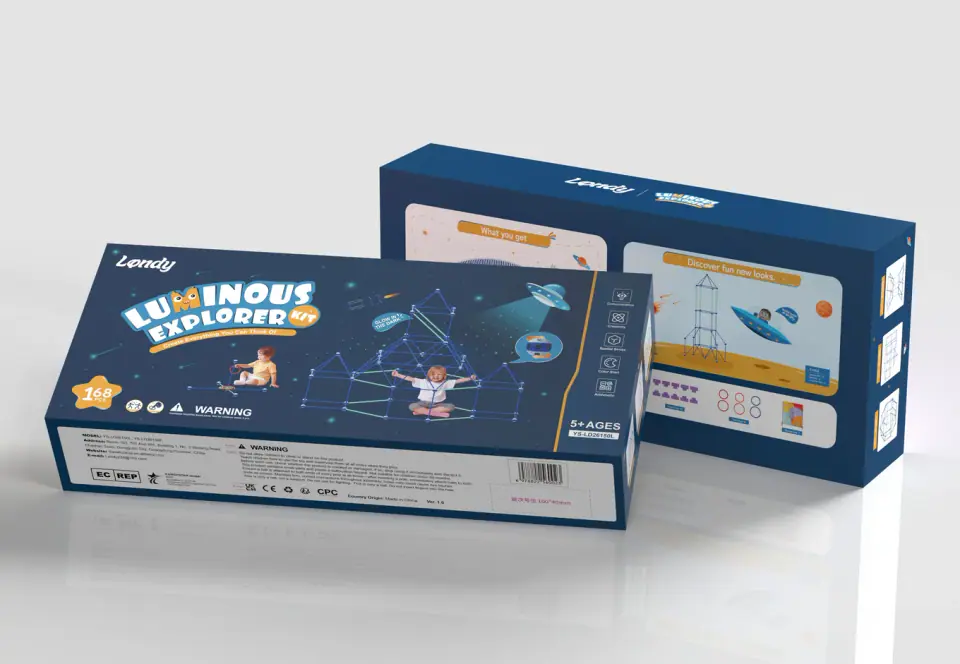
Yaoshun’s current fort-building range includes 69-piece, 100-piece, 130-piece, 168-piece and 228-piece configurations. A smaller set can suit a first experience or a compact room. Larger configurations support broader structures, more participants and more detailed play, provided that the rod lengths, connector count and accessories are balanced for the intended use.
Why open-ended construction supports learning
The learning value begins with the sequence of decisions. A child chooses a goal, selects parts, tests a frame and changes the plan when it does not hold. That sequence brings together planning, spatial judgment, hand control, problem solving and communication.
Construction play also makes spatial relationships visible. Children compare length, notice angles, leave space for an entrance and decide where a roof needs support. When several children build together, they naturally divide tasks and use precise language such as “add another corner here” or “make the doorway wider”. The play becomes a practical setting for negotiation and explanation.
A product does not create these outcomes automatically. Children need time to handle the parts, make decisions and try again. Adults can support the process by asking useful questions without taking over the design.
How adults can keep the play going
Instead of building the complete structure first, an adult can ask what the child wants to make, where the entrance should go and what could make a weak side stronger. These questions keep the child in the designer’s role.
Families can create short missions. Build a shelter for a favourite toy, add a delivery route, create a reading corner or redesign the entrance without changing the base. Teachers and activity leaders can assign planning, connecting, decorating and presenting as separate roles.
Safety comes before the size of the fort
Large construction toys should be used on a flat, dry surface away from stairs, windows, heat sources, glass doors and furniture that can tip. Before children enter a structure, an adult should check the connectors, roof and openings for loose parts or pinch points.
Age grading should reflect part size, assembly force, structure height and the expected way the product will be used. For products sold in the United States, the project should include the applicable toy testing and Children’s Product Certificate work. Products for the European Union and United Kingdom need their own safety assessment, marking, technical documentation and market requirements.
How to judge long-term play value
Ask whether the kit supports more than one finished shape, whether a child can begin with limited help, whether the parts are easy to sort and store, and whether the accessories add new stories after the first build. For brands and buyers, consider whether an entry set, family set, collaborative set and themed set can share a core construction system.
The lasting value of a Fort Building Kit is not a single perfect castle. It is the child’s willingness to build something different next time.
Yaoshun fort-building kit recommendations
- LONDY Little Explorer 69-Piece Fort Building Kit suits first-time users and smaller rooms. View product
- LONDY Colorful Dreamer 100-Piece Fort Building Kit adds colour, flags, a printed blanket and storage for role-play. View product
- LONDY Luminous Explorer 168-Piece Glow Fort Building Kit extends building into evening exploration and themed gift play. View product
- LONDY Magic Building 228-Piece Fort Building Kit is suited to parent-child building, siblings and larger shared structures. View product
Yaoshun also supports OEM/ODM development, colour planning, piece-count combinations, packaging and themed fort-building programs.