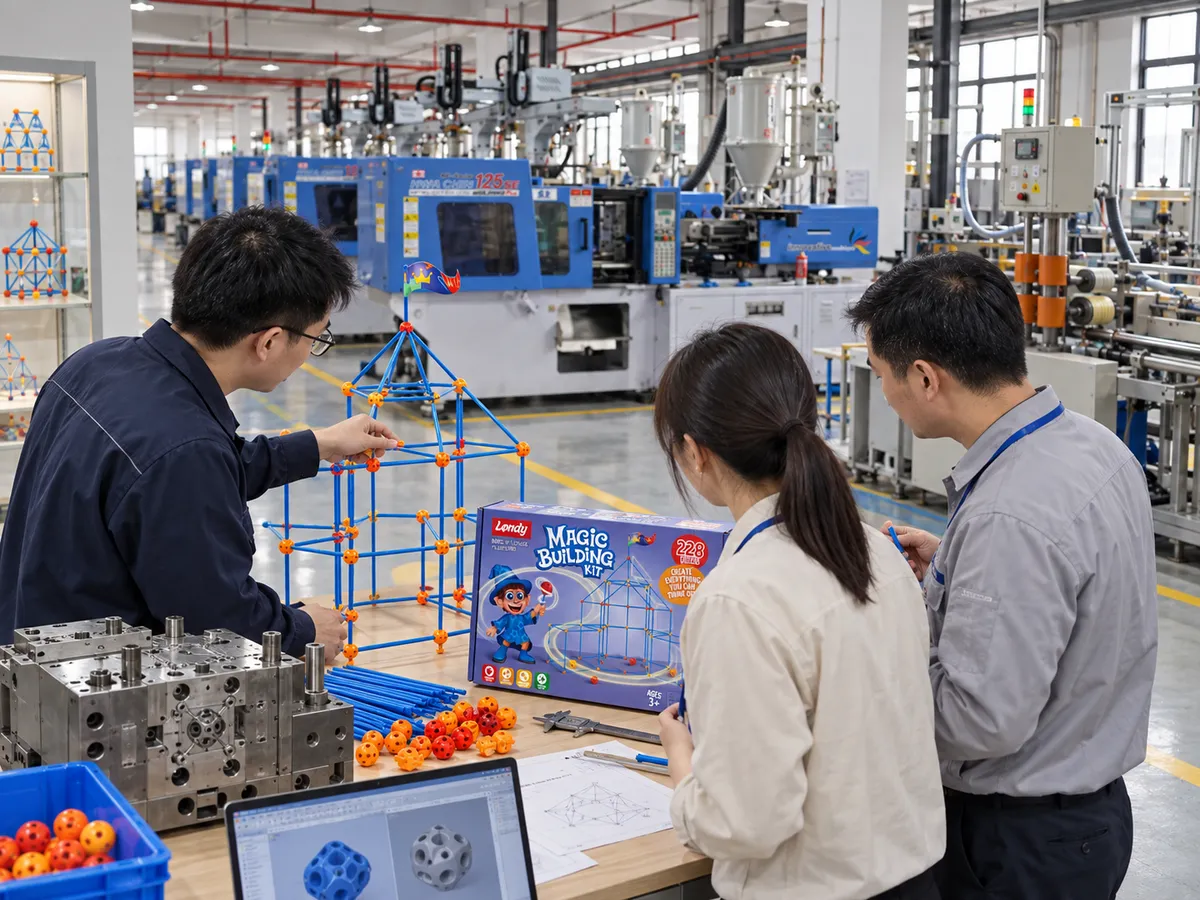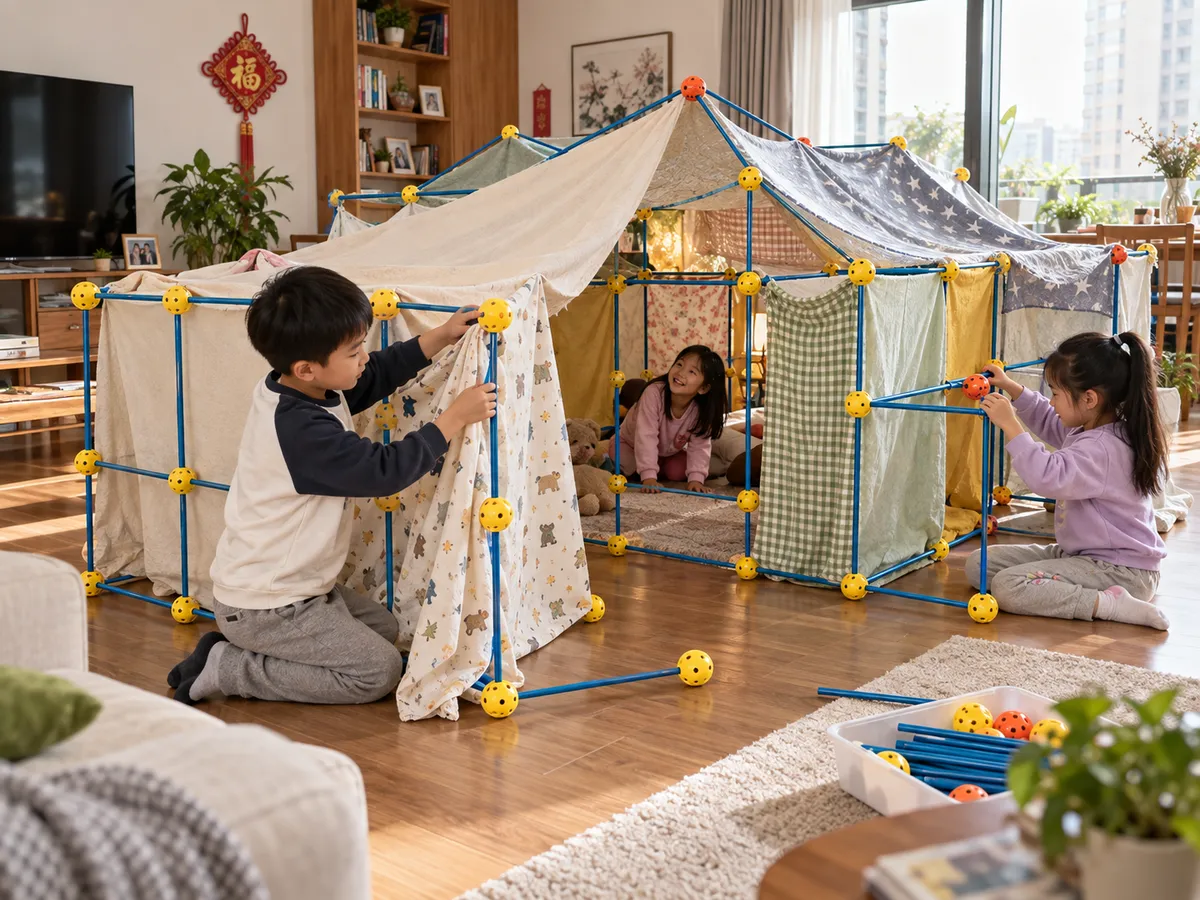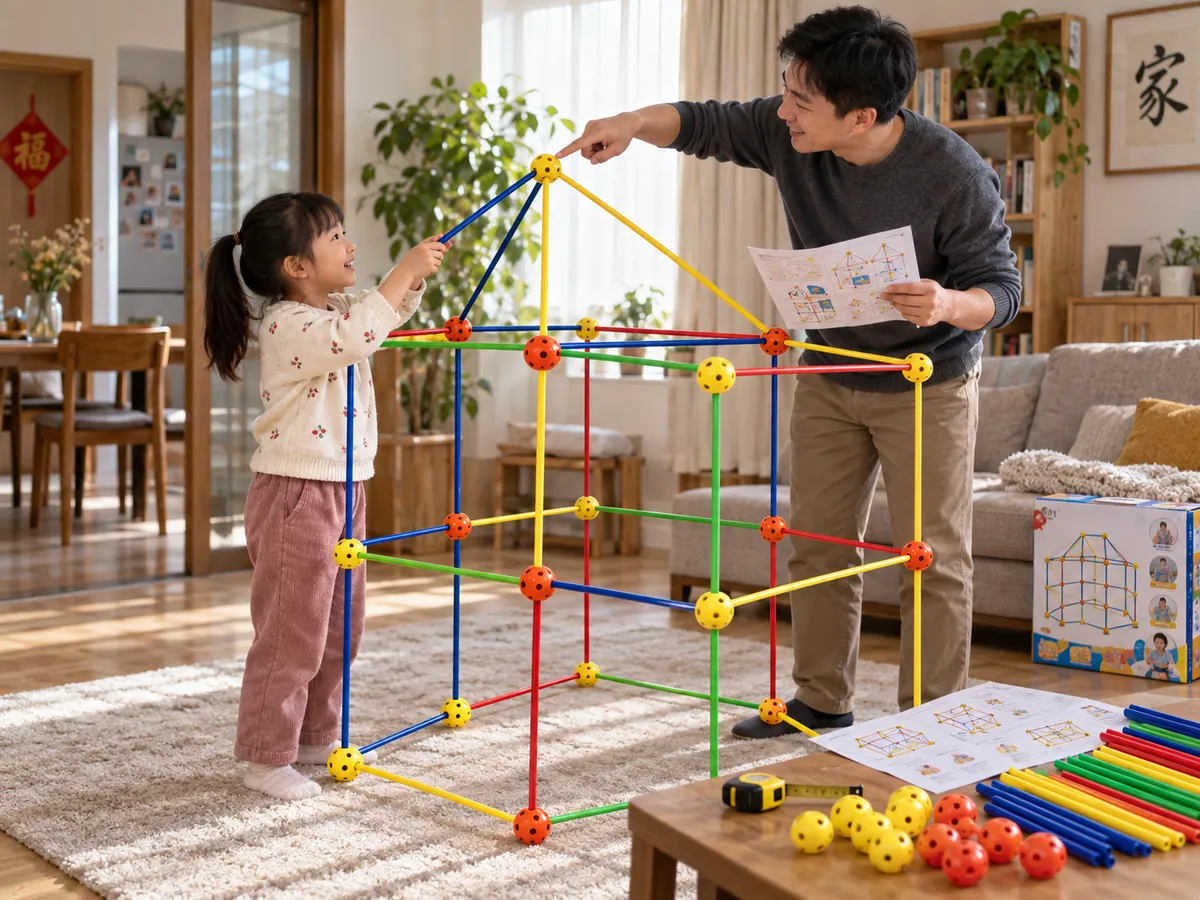
STEM learning does not always need a screen, a coding card, or a formal lesson. Sometimes it starts when a child asks a very practical question: why does this roof keep falling?
Fort building toys make spatial thinking visible. Children compare rods, choose connector angles, test balance, and rebuild after a mistake. Those actions look like play, but they are also early engineering habits.
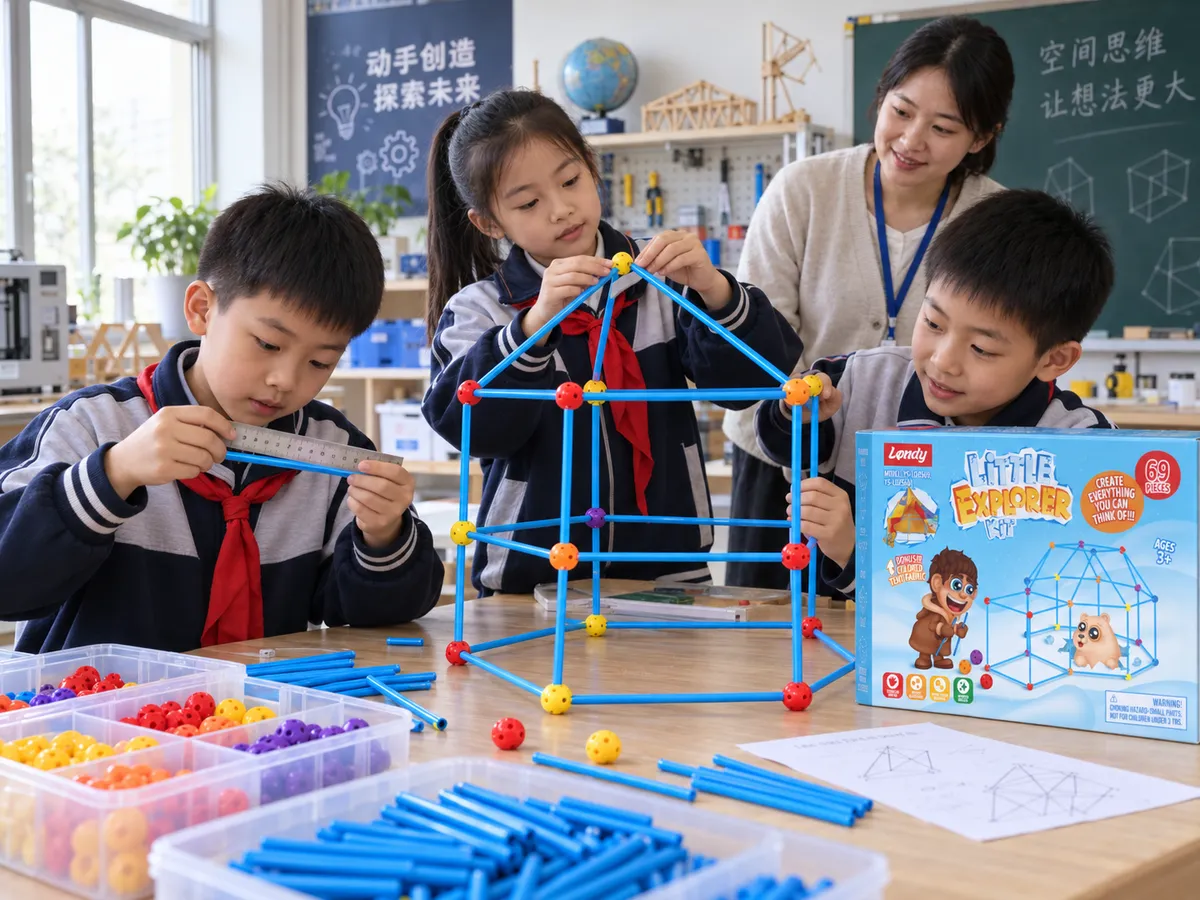
Children learn space by moving through it
A drawing of a triangle is useful, but a triangle big enough to hold a blanket teaches something different. Children feel the limits of the shape, notice when a side is too short, and learn that a structure can look right but still need reinforcement.
This is why fort building works for early STEM play. It asks children to think with their eyes, hands, and body at the same time. They are not memorizing a rule; they are discovering what the rule does.
- Rod length introduces measurement and comparison.
- Connector direction introduces angle and orientation.
- Unstable frames introduce testing, adjustment, and persistence.
Small kits can be the better first step
For younger builders, an oversized set can feel exciting but hard to manage. A compact kit such as the LONDY Little Explorer 69-Piece Fort Building Kit gives children a first win: a small tent, a reading corner, or a simple tunnel.
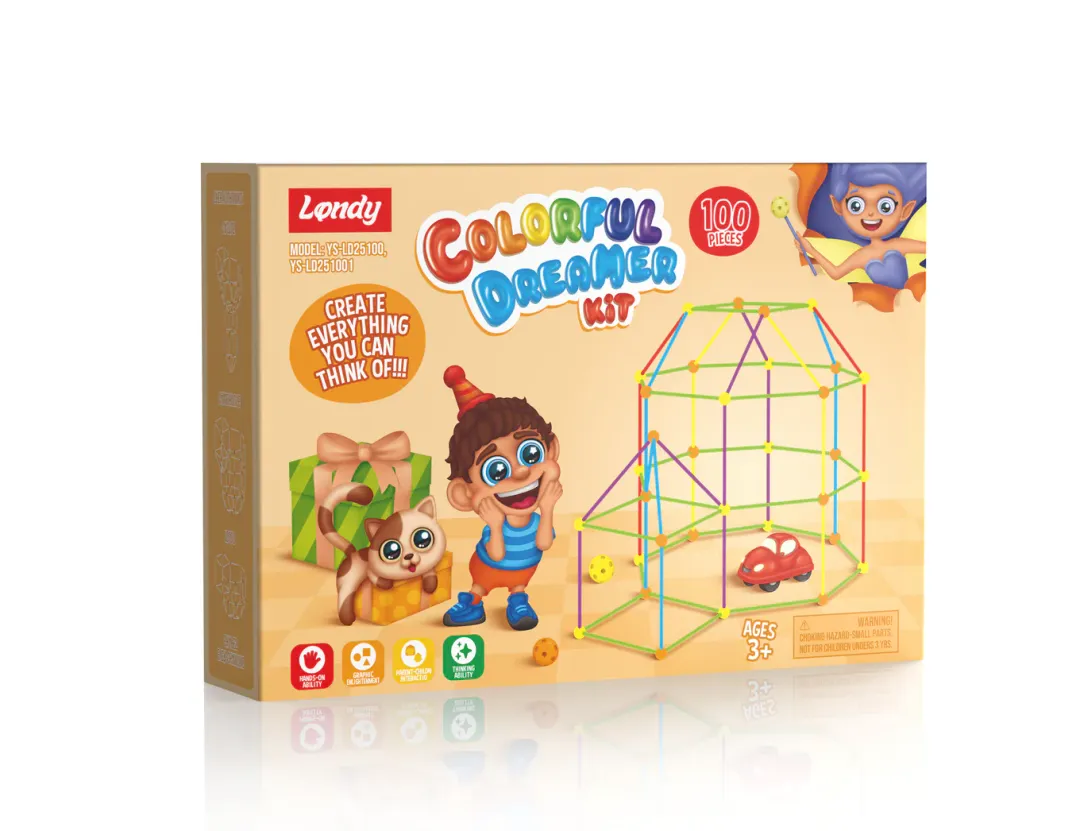
Once the child understands the rod-and-ball system, a larger colorful set such as the LONDY Colorful Dreamer 100-Piece Fort Building Kit can extend the same thinking into bigger layouts and multi-child play.
Explain STEM through real scenes
The strongest message is not an abstract STEM claim. It is visible learning: children build something large enough to use, then improve it. Photos can show the same set as a house frame, tunnel, reading tent, or play base.
Yaoshun Toys supports fort building toy development from product configuration to packaging and OEM/ODM adjustment. More building toy options are listed at www.yaoshuntoys.com/products.
Spatial Thinking Is Built Through Action
Children often understand space through concrete decisions: this rod is too short, the roof tilts, two connectors are too far apart, or the entrance is too low to crawl through.
Those everyday choices involve length, direction, proportion, and stability. Fort building places abstract ideas into a scene children can see, touch, and correct.
Starter Kits Help Children Learn Basic Frames
A base configuration such as 69-Piece Oversized Fort & Tent Building Kit is useful for younger builders starting with squares, triangular support, and small tents. As skill grows, families can move to larger piece counts and more complex structures.
| Building action | Skill involved | How to show it |
|---|---|---|
| Choose rod length | Length comparison and spatial judgement | Show different rod sizes |
| Change connector direction | Angle and structure understanding | Add step images or basic shapes |
| Reinforce weak points | Problem spotting and solving | Show parent-child testing scenes |